LED Strip Lumens per Foot: How Much Light Each Application Needs
Typical lumens per foot for each application, how to convert from per-meter specs, and a worked kitchen example that turns a target light level into a strip choice.
LED strip lumens per foot (lm/ft) tells you how much light one foot of strip puts out, and it's the number to size brightness on. As typical starting points, accent and toe-kick lighting sits around 100 to 200 lm/ft, under-cabinet task light around 300 to 500 lm/ft, and a cove that serves as the room's main light at 450 lm/ft and up. Below you'll find how to convert per-meter specs, how lumens relate to watts, typical ranges by application, and a worked kitchen example.
What Lumens per Foot Means
Lumens measure the total visible light a source emits. Dividing by length gives you a figure you can compare across strips and scale to any run: a 10 ft run at 300 lm/ft emits 3,000 lumens in total. For a sense of scale, a common household A19 bulb sold as a 60 W replacement gives about 800 lumens.
Two things to keep in mind when you read the number on a spec sheet:
- It's measured on the bare strip, usually at rated voltage and under controlled conditions. It's what leaves the strip, not what reaches the counter or the wall.
- It's quoted per color temperature. The same strip at 2700K and at 4000K rarely has the same output, so compare like with like.
Converting Lumens per Meter to Lumens per Foot
Many spec sheets quote output per meter. One meter is 3.281 ft, so:
lm/ft = lm/m ÷ 3.281
Watts convert the same way: W/ft = W/m ÷ 3.281. To go the other way, multiply by 3.281.
| Per meter | Per foot |
|---|---|
| 300 lm/m | 91 lm/ft |
| 600 lm/m | 183 lm/ft |
| 900 lm/m | 274 lm/ft |
| 1,200 lm/m | 366 lm/ft |
| 1,500 lm/m | 457 lm/ft |
| 2,000 lm/m | 610 lm/ft |
A strip advertised at "1,000 lumens" per meter delivers about 305 lm/ft. Mixing the two units up is one of the most common reasons a run comes out a third as bright as expected, or three times brighter.
Lumens per Watt and Watts per Foot
Efficacy, in lumens per watt (lm/W), tells you how well a strip turns power into light:
lm/W = lm/ft ÷ W/ft
Two strips can both deliver 400 lm/ft and draw very different power. Watts per foot sets the driver size, the heat in the profile and the voltage drop along the run. Lumens per foot sets the light. Efficacy connects the two, and it's the honest way to compare products. The light output and efficacy guide goes deeper on reading these figures.
In practice, the choice splits two ways. When the brief is simply more light from a narrow line, look at the HIGH OUTPUT collection. When an energy code, a power budget or heat in tight millwork is the constraint, start with HIGH EFFICIENCY strips, which give you the same light for fewer watts per foot.
How Many Lumens per Foot Each Application Needs
These are typical starting points, not rules. Mounting distance, surfaces, diffusers and the other light in the room all move the answer.
| Application | Typical output | Notes |
|---|---|---|
| Accent: toe-kicks, under-bed, step edges | 100–200 lm/ft | Close to the floor and seen in low ambient light. Usually dimmed. |
| Display shelving and glass cabinets | 150–300 lm/ft | Residential display. Retail merchandising often runs 300–500 lm/ft. |
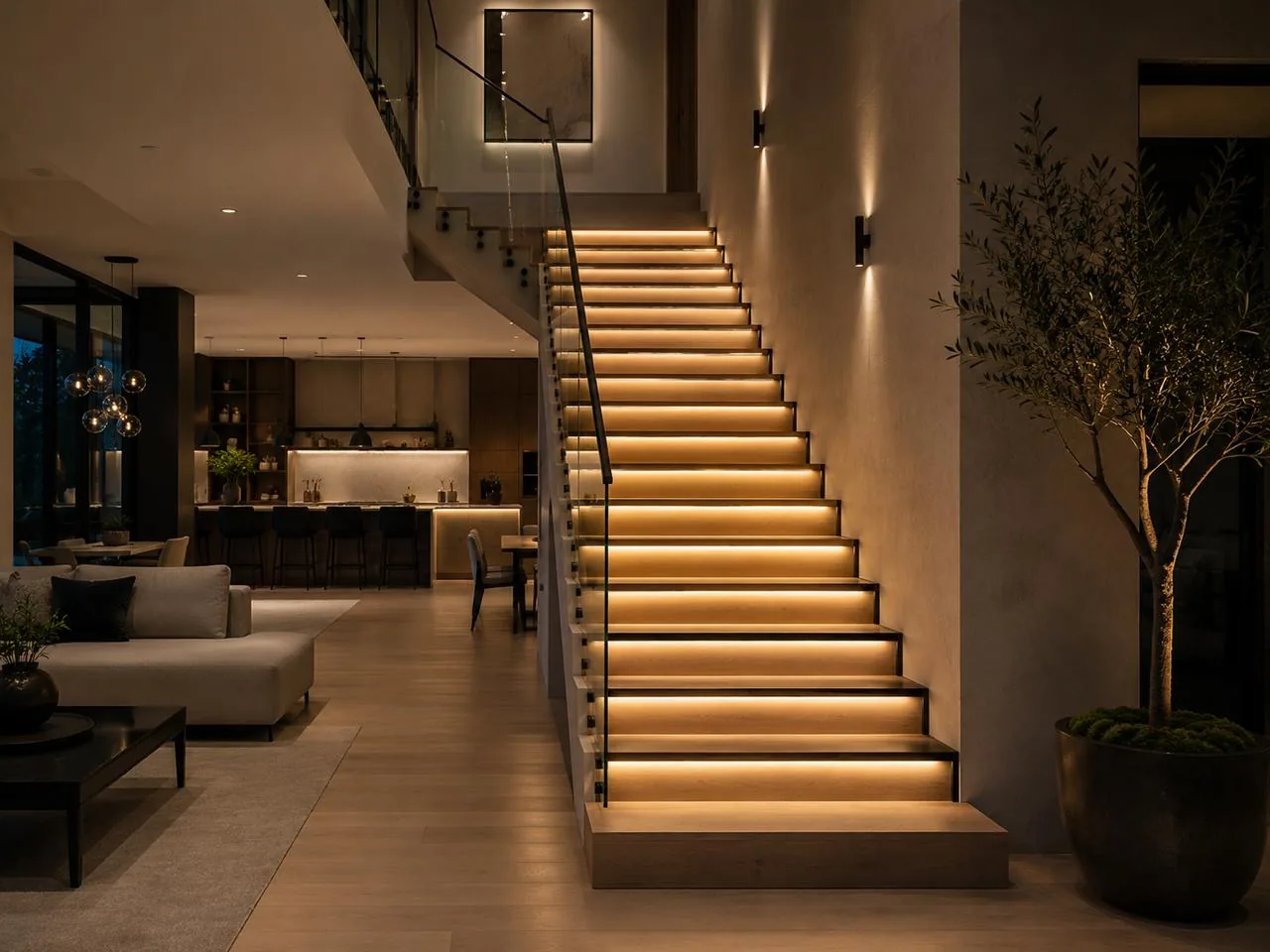
| Under-cabinet task light | 300–500 lm/ft | For cabinets about 18 in. above the counter. Dark counters need the upper end. |
| Cove, decorative glow | 150–250 lm/ft | The room is lit by other sources. |
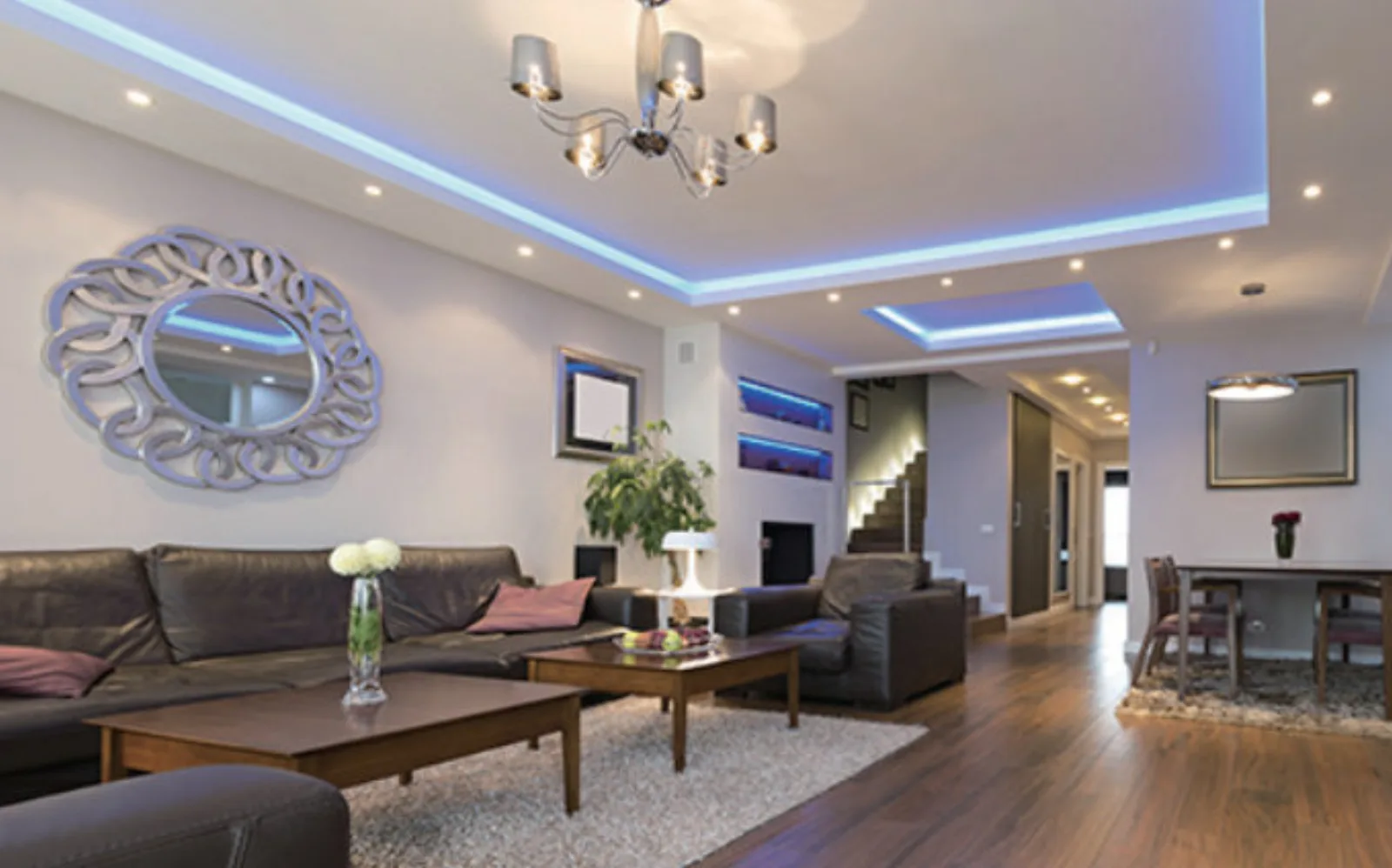
| Cove, ambient alongside downlights | 250–400 lm/ft | Depends heavily on ceiling color and cove setback. |
| Primary light from indirect fixtures | 450+ lm/ft | The strip is the room's main light. Plan dimming. |
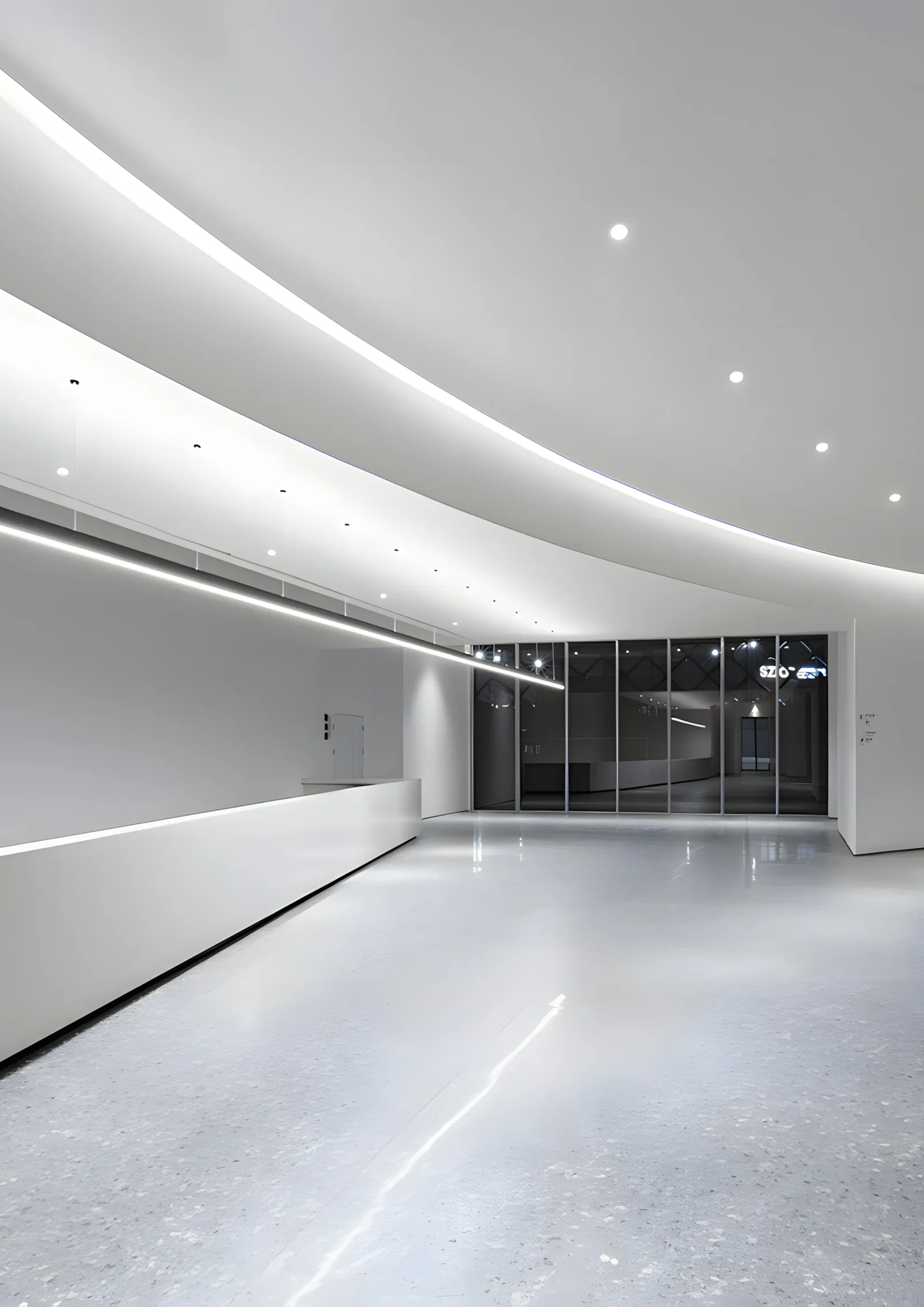
| Wall wash and facade grazing | 400–800+ lm/ft | Scales with wall height and finish. Exterior facades often need more. |
For kitchens, our under-cabinet lighting guide covers placement and profiles in detail. For ceilings, the cove lighting article explains how setback and cove depth change the result.
What Reduces the Light You Actually Get
The spec sheet number is the start. Several things take light away between the strip and the surface you care about.
- Diffusers. A clear lens passes most of the light. Frosted and opal diffusers trade output for a smoother line, and the denser the diffuser, the more it costs. Check the profile's transmission figure where it's published. The profiles and diffusers guide compares the options.
- Channel depth. A deep recessed channel cuts off the widest angles of light and absorbs a little on its walls. It also hides the strip and controls glare, so it's often a good trade.
- Surface finish. Indirect light depends on what it bounces off. A white ceiling returns most of what hits it; dark walnut, slate or matte black returns a small fraction. The same cove can need half again as much strip output in a dark room.
- Distance. Close to a long line of light, illuminance falls roughly in proportion to distance, not with its square as it does for a point source. Double the distance and you get about half the light. Far from a short run, the falloff gets steeper.
- Heat and voltage drop. A strip running hot gives up some output, which is one reason to mount it in aluminum. The far end of an overlong run is dimmer than the feed end.
- Dimming. Obvious, but it means a dimmed system's design output and its everyday output can be very different numbers.
CCT and CRI: Same Lumens, Different Brightness
Color temperature and color rendering change both the measured output and how bright a space feels.
Warmer CCT usually costs lumens. The same strip at 2700K typically puts out fewer lumens than at 4000K, because more of the blue light is converted by phosphor and some energy is lost in that step. The gap varies by product, so compare the lm/ft listed for the exact CCT you plan to use. ENKORA product pages list lm/ft and lm/W for every CCT.
Higher CRI usually costs efficacy. Rendering reds and skin tones well takes a fuller spectrum, and the phosphors that provide it are less efficient. Expect fewer lumens per watt from a CRI 95+ strip than from a CRI 80 or 90 strip of the same build. The CRI guide explains what you get in return.
Perception doesn't follow the meter. At equal lumens, cooler light often reads as brighter to most people. High-CRI light makes surfaces look clearer and colors richer, so a room can feel well lit at a lower lumen level. Don't swap a 3000K CRI 95 strip for a 4000K CRI 80 one on lumens alone and expect the same result.
A Worked Example: A 12 ft Kitchen Counter
You're lighting a 12 ft run of counter, 2 ft deep, with cabinets about 18 in. above it. You want an average of about 50 foot-candles on the work surface, a common design target for kitchen counters. One foot-candle is one lumen per square foot.
- Counter area: 12 ft × 2 ft = 24 sq ft.
- Light needed on the counter: 50 fc × 24 sq ft = 1,200 lumens.
- Losses (assumptions): a frosted diffuser passing about 80%, and about half of the light that leaves the profile landing on the counter. The rest goes to the backsplash, cabinet faces and the floor.
- Strip output needed: 1,200 ÷ 0.5 ÷ 0.8 = 3,000 lumens.
- Per foot: 3,000 lm ÷ 12 ft = 250 lm/ft.
That's the minimum on paper. Add headroom for a darker countertop, aging and the inevitable mistake in your assumptions, and specify 300 to 400 lm/ft on a dimmer. At 350 lm/ft the same math gives about 70 fc at full output, which you dim to taste.
Now compare two strips that both deliver 350 lm/ft:
| Strip A | Strip B | |
|---|---|---|
| Output | 350 lm/ft | 350 lm/ft |
| Power | 4.5 W/ft | 3.0 W/ft |
| Efficacy | 78 lm/W | 117 lm/W |
| Load, 12 ft | 54 W | 36 W |
| Minimum driver (÷ 0.8) | 67.5 W | 45 W |
| Current at 24V | 2.25 A | 1.5 A |
Same light on the counter. Strip B needs a 60 W driver instead of a 96 W one, puts a third less heat into the underside of the cabinet, and draws less current through the feed wire.
Why Brighter Is Not Always Better
More lumens per foot is not the same as better lighting.
- Glare. A strip that's visible from a seated position, or reflected in a polished stone counter, gets more uncomfortable the brighter it is. High output needs good shielding.
- Contrast. Toe-kicks at task-light levels look like a runway. A cove much brighter than everything else in the room makes the walls below it look gloomy.
- Dimming range. A strip specified at three times the needed output spends its life near the bottom of the dimming curve, where some drivers and dimmers get steppy or flicker. Plan for a sensible margin, not a large one.
- Power. Energy codes count connected watts, and every watt is heat in the profile and current in the wire.
Common Mistakes
- Mixing up lm/m and lm/ft. Check the unit before comparing two spec sheets. A per-meter figure is about 3.3 times the per-foot one.
- Using watts as a brightness proxy. W/ft tells you power, not light. Two 4 W/ft strips can differ widely in output.
- Comparing across CCTs. A 4000K figure for one strip against a 2700K figure for another isn't a fair comparison.
- Ignoring the diffuser and profile. The lumens on the spec sheet are bare-strip lumens. Budget for what the profile takes.
- One number for every finish. A white kitchen and a dark walnut one with black counters need different output for the same result.
- Specifying high output without a dimmer. If you oversize, you need a way to bring it down.
- Mixing strips in one sightline. Two products with different lm/ft side by side show as a visible step in brightness, even when each looks fine alone.
Frequently asked questions
How many lumens per foot do I need for under-cabinet lighting?
Typically 300 to 500 lm/ft for cabinets about 18 in. above the counter. Use the upper end for dark countertops or dense diffusers, and put the strip on a dimmer.
How do I convert LED strip lumens per meter to lumens per foot?
Divide lumens per meter by 3.281. A strip rated 1,200 lm/m delivers about 366 lm/ft, and 1,000 lm/m is about 305 lm/ft.
How bright should LED strip lights be for cove lighting?
As typical starting points, about 150 to 250 lm/ft for a decorative glow, 250 to 400 lm/ft for ambient light alongside downlights, and 450 lm/ft and up when the cove is the room's main light.
What is a good lumens per watt for LED strip?
It varies with CCT, CRI and construction, so compare strips of the same color temperature and CRI. Calculate it as lm/ft divided by W/ft; a higher figure means the same light for fewer watts, a smaller driver and less heat.
Are more lumens per foot always better?
No. Excess output brings glare, harsh contrast and a strip that runs near the bottom of its dimming range. Size for the task with a reasonable margin and use a dimmer.
Specify with ENKORA
Working on a project? Send us the drawings and we will propose strips, profiles and drivers that fit together.