Cove Lighting With LED Strips: Distances, Output and Color Temperature
A cove is judged by the ceiling it lights, not the strip inside it. Geometry first, then output, then color.
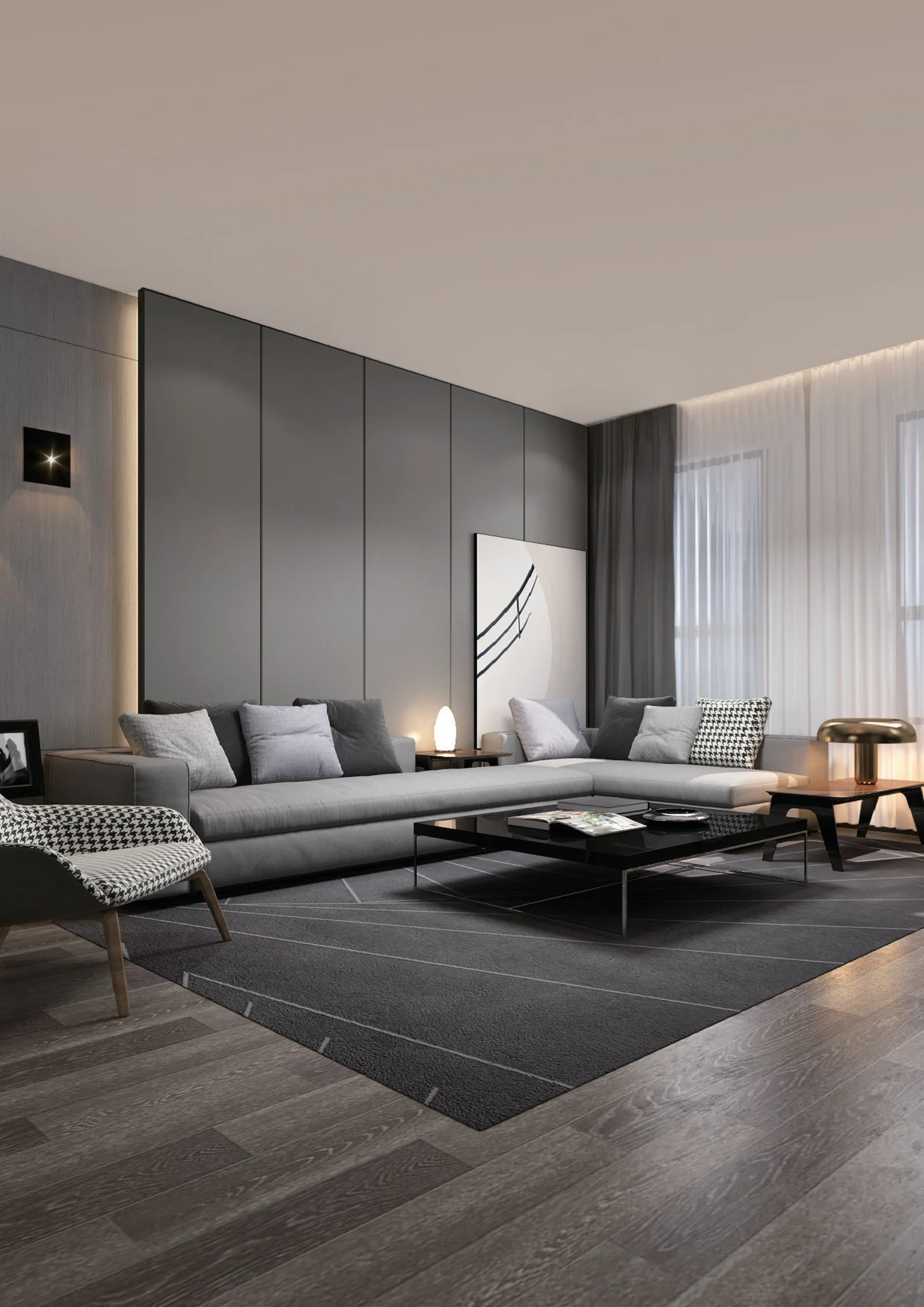
LED cove lighting hides the light source and lets the ceiling become the fixture. Done well, it's a soft, even wash that makes a room feel taller and calmer. Done badly, you get a hard bright band near the lip, dark patches where one run ends and the next begins, or a row of dots you can see from the sofa. Nearly all of that is decided by the cove's geometry, long before anyone chooses a strip.
Get the Geometry Right
Three dimensions matter:
- Depth: from the cove lip to the back wall. It's what hides the strip from view.
- Setback: how far the strip sits back from the lip.
- Throw: the open space between the strip and the ceiling above it.
The longer the throw, the farther the light spreads and the softer the gradient across the ceiling. With only an inch or two of throw, you get a bright stripe right above the strip. As a working rule, give the light several inches of open space above it and keep the strip back from the lip so it can't be seen from the room.
Check the sightlines from more than one spot. A strip that's invisible from the sofa might be in full view from a stair landing or a mezzanine.
Aim the Light
Mounting the strip on the back wall of the cove facing out, or on the cove floor tilted toward the wall, pushes light across the ceiling instead of straight up into it. An angled profile makes that repeatable along the whole run. Light aimed straight up at a close ceiling is what creates the hot band coves are known for.
Choose Output for the Role
| Role of the cove | Typical output |
|---|---|
| Decorative glow, room lit by other sources | 150–250 lm/ft |
| Ambient light alongside downlights | 250–400 lm/ft |
| Primary light for the room | 450+ lm/ft |
When in doubt, specify more output than you think you'll need and dim it down. A cove that's too dim can only be fixed by replacing the strip. For coves that carry the room, the HIGH OUTPUT series gives you headroom, and HIGH EFFICACY keeps the load down when an energy code applies.
COB or SMD in a Cove?
Since the strip is hidden, SMD tape works well in a properly deep cove. Pick COB when the cove is shallow, when the strip might catch someone's eye from an odd angle, or when the ceiling is glossy enough to reflect individual LEDs. See COB vs SMD and the cove and ceiling collection.
Color Temperature and Consistency
Most residential coves are 2700K. Hospitality often goes warmer, to 2200–2400K, for a candlelit feel. Offices and retail usually sit at 3000–4000K. Two things matter more in a cove than almost anywhere else:
- Consistency along the run. A cove turns any difference between reels into a visible change of tone on the ceiling. Order the whole quantity together and specify tight color binning. Our binning and SDCM guide explains what to ask for.
- Tunable white lets one cove shift from cooler daytime light to warm evening light. See TUNABLE WHITE.
Plan Power Around the Ceiling
Long perimeter coves are where voltage drop shows most, because the ceiling makes any brightness gradient obvious. Place feed points so no run goes past the strip's published maximum. For long, unbroken perimeters, look at the LONG RUN series. Put drivers where someone can reach them after the ceiling is finished. Our article on voltage drop has a worked example.
Common Cove Mistakes
- Too little throw. A cove built one inch below the ceiling will always show a hot stripe. Fix it in the framing, not with a dimmer.
- Gaps at the corners. Runs that stop short of a corner leave a dark notch. Overlap into the corner or use a corner connector.
- Butting two batches together. Two reels from different batches can meet in the middle of a wall as a visible color step.
- White tape on a colored ceiling. Light bounces off the ceiling color. A warm gray ceiling will make 3000K read warmer; a cool blue one will make it read cooler.
Frequently asked questions
How far should LED strip be from the ceiling in a cove?
Leave enough open space above the strip for the light to spread, generally several inches. With only an inch or two of throw, the light forms a bright stripe directly above the strip instead of an even wash.
How bright should cove lighting be?
Roughly 150–250 lm/ft for a decorative glow, 250–400 lm/ft for ambient light alongside downlights, and 450 lm/ft and up when the cove is the room's primary light. Specify with headroom and dim down.
Should I use COB or SMD LED strip for cove lighting?
SMD works well in a properly deep cove where the strip is hidden. Choose COB for shallow coves, glossy ceilings, or anywhere the strip might be seen, because it reads as a continuous line.
What color temperature is best for cove lighting?
2700K is typical for homes, 2200–2400K for a candlelit hospitality feel, and 3000–4000K for offices and retail. Tunable white lets one cove change through the day.
Specify with ENKORA
Working on a project? Send us the drawings and we will propose strips, profiles and drivers that fit together.