LED Strip vs Rope Light vs Puck Lights: Which One Fits the Job
Rope light, puck lights and LED strip all promise a glow under the cabinet or along the rail. Here's how they differ, where each still makes sense, and why strip in a channel took over architectural work.
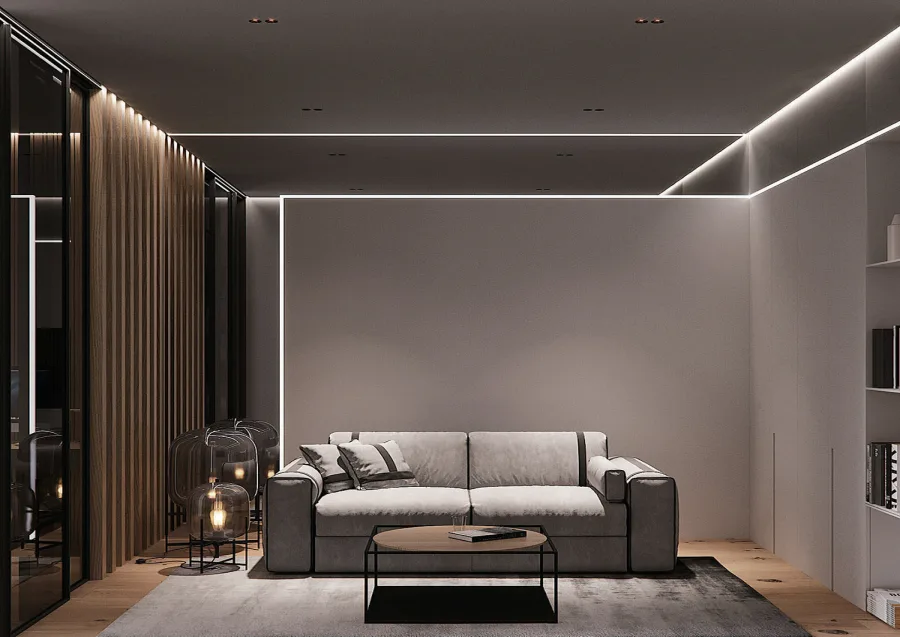
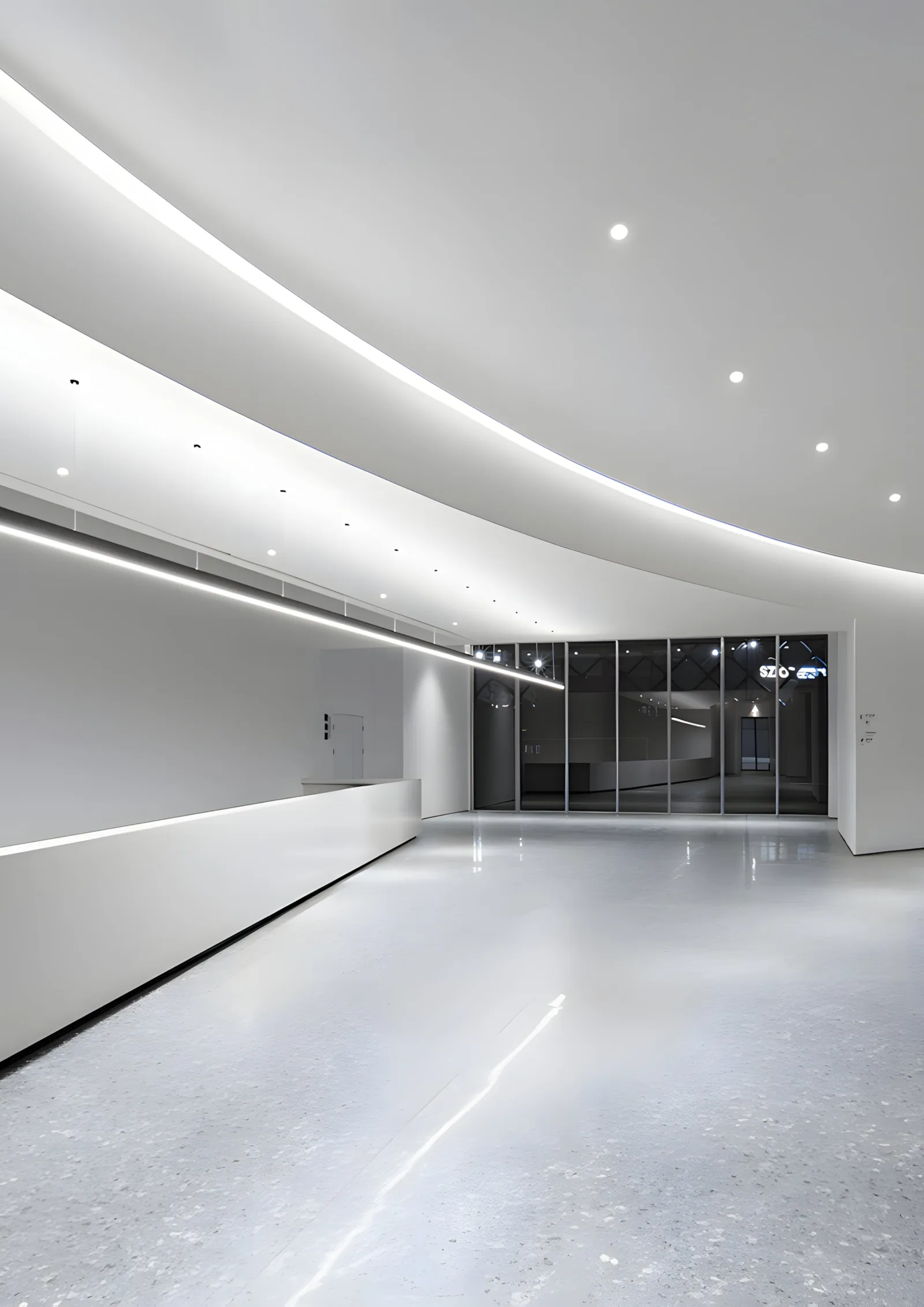
LED strip vs rope light comes down to control. Rope light is a round PVC tube with LEDs inside, usually plugged into 120V, cut only at long marked intervals, and it glows in every direction. LED strip is a flat, low-voltage tape that cuts every inch or two, sits in an aluminum channel and puts its light exactly where you aim it. Puck lights are a third option: individual round fixtures that throw pools of light rather than a line. For under-cabinet, cove and millwork, strip in a channel is the default. Rope light still earns its place for temporary and holiday work, and pucks for spot accents and glass shelves.
Here's what each product actually is, how they compare line by line, and which to choose for the most common jobs.
What Each Product Is
Rope light
Rope light is a string of small LEDs (or, in older and cheaper versions, tiny incandescent bulbs) sealed inside a clear or frosted PVC tube, typically about 3/8 in. or 1/2 in. in diameter. Most rope light sold in the US runs directly on 120V AC and plugs into a wall outlet with a power cord. Because the circuit inside is built for line voltage, you can only cut it at marked points that are far apart, commonly every 18 in. to 3 ft or more depending on the product. Cut anywhere else and a whole section goes dark. Every cut end needs a 120V end cap or connector rated for it.
Puck lights
Puck lights are small round fixtures, around the size of a hockey puck, that mount to the underside of a cabinet or shelf, either surface-mounted or recessed into a drilled hole. Each one throws a cone of light. Hardwired kits usually run on a 12V or 24V DC driver with a splitter hub; plug-in kits use a small adapter, and there are battery versions for rentals. Older halogen and xenon pucks ran hot enough to warm the cabinet above them; LED pucks run much cooler.
LED strip
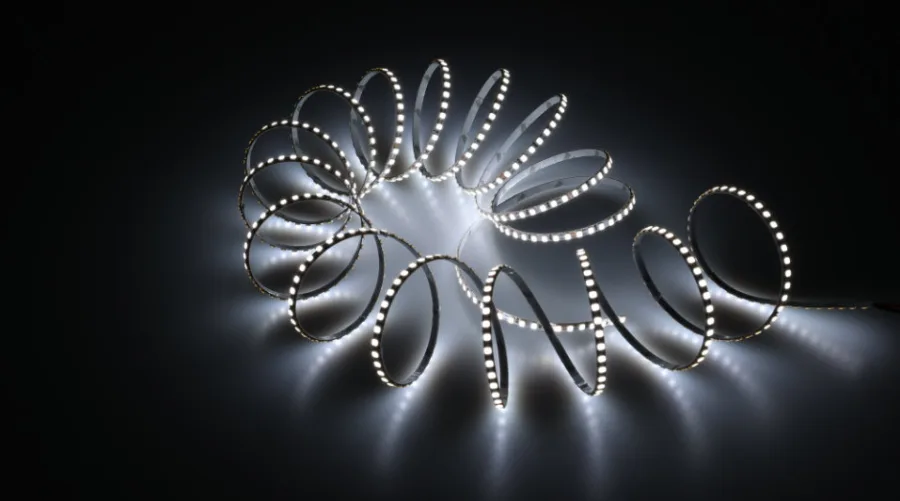
LED strip is a flexible circuit board, often 3/8 in. wide or narrower, with LEDs mounted every fraction of an inch and adhesive tape on the back. It runs on 12V or 24V DC from a driver, and it has copper cut pads at short intervals, typically every 1 to 4 in. depending on voltage and LED density (check the spec sheet for the exact figure). In finished work it goes into an aluminum channel with a diffuser, which hides the dots, sinks the heat and gives you a clean, straight line. Within strip you choose between SMD (individual LED packages, see SMD strips) and COB (a continuous phosphor line that reads dotless even with a shallow diffuser, see COB strips).
LED Strip vs Rope Light vs Puck Lights at a Glance
| Rope light | Puck lights | LED strip in a channel | |
|---|---|---|---|
| Light quality | Basic white or color; limited CCT and CRI choices | Varies widely by product | Wide choice of CCT and CRI 90+ options |
| Evenness | Dotted glow through the tube | Separate pools of light | Continuous line; COB or a diffuser removes dots |
| Cut interval | Long, commonly 18 in. to 3 ft or more | Not cuttable; fixed fixtures | Short, typically 1 to 4 in. |
| Voltage | Usually 120V AC | 12V/24V DC, plug-in or battery | 12V or 24V DC |
| Installation | Clips or channel; bulky 120V connectors | One hole or two screws per puck, a lead per puck | Channel, end caps, one feed per run |
| Heat | Low for LED, warm for incandescent | Low for LED, high for halogen or xenon | Low per foot; the aluminum channel carries it away |
| Dimming | Limited; depends on the product and dimmer | Depends on the driver | Full range with a matched driver or controller |
| Look when visible | A glowing tube | A row of round fixtures | A clean, crisp line |
| Lifespan factors | PVC yellowing in sun, moisture at end caps | Driver and splitter quality, fixture heat | Driver sizing, channel heat sinking, connections |
| Typical cost per foot | Lowest | Priced per fixture, not per foot | Moderate, plus the channel |
The cost row is where people get misled. Rope light is cheap per foot because it's simple. Once you add a channel and a properly sized driver, strip costs more per foot than rope, but the result looks like architectural lighting instead of a holiday decoration.
Why Strip in a Channel Replaced Rope Light in Architectural Work
Twenty years ago, rope light was what went into coves and toe kicks because there wasn't much else. It lost that job for practical reasons:
- Direction. Rope glows 360 degrees. Half of its light goes into the surface it's mounted on, and the tube itself is always visible as a bright cylinder. Strip on a flat board aims its light in one direction, and the channel shapes it further.
- Size. A round 1/2 in. tube needs more space than a flat tape in a shallow channel. Under a cabinet with a 1 1/4 in. light rail, that difference decides whether the source shows.
- Cut points. Rope that cuts every 18 in. or more leaves gaps at the ends of a cabinet run or a cove. Strip that cuts every inch or two lands within an inch or two of any dimension.
- Voltage. Low-voltage DC strip on a Class 2 driver keeps line voltage out of the millwork. Rope light puts 120V in a soft PVC tube right where hands and dishes go.
- Light quality. Strip comes in a range of color temperatures and high-CRI versions; rope usually doesn't.
Where you want the glowing-line look on purpose, such as a sign, a railing or a facade outline, the modern replacement for rope is LED neon. It's jacketed in silicone, which generally holds up to sun better than PVC, and it diffuses into a smooth line with no dots. See the neon flex collection.
Which to Choose for Common Jobs
| Job | Best choice | Why |
|---|---|---|
| Under-cabinet task light | Strip in a channel, near the front edge | Even light across the counter, no scallops on the backsplash |
| Ceiling cove | Strip; COB if the cove is shallow | Continuous wash with no hot spots |
| Shelf and display cases | Strip in a channel; pucks for glass shelves | Strip lights the whole shelf; pucks spotlight objects |
| Outdoor railing and deck | Outdoor-rated strip in channel, or neon flex | Sealed, low voltage, cut to exact length |
| Holiday and temporary | Rope light | Plug in, clip up, take down |
Under-cabinet
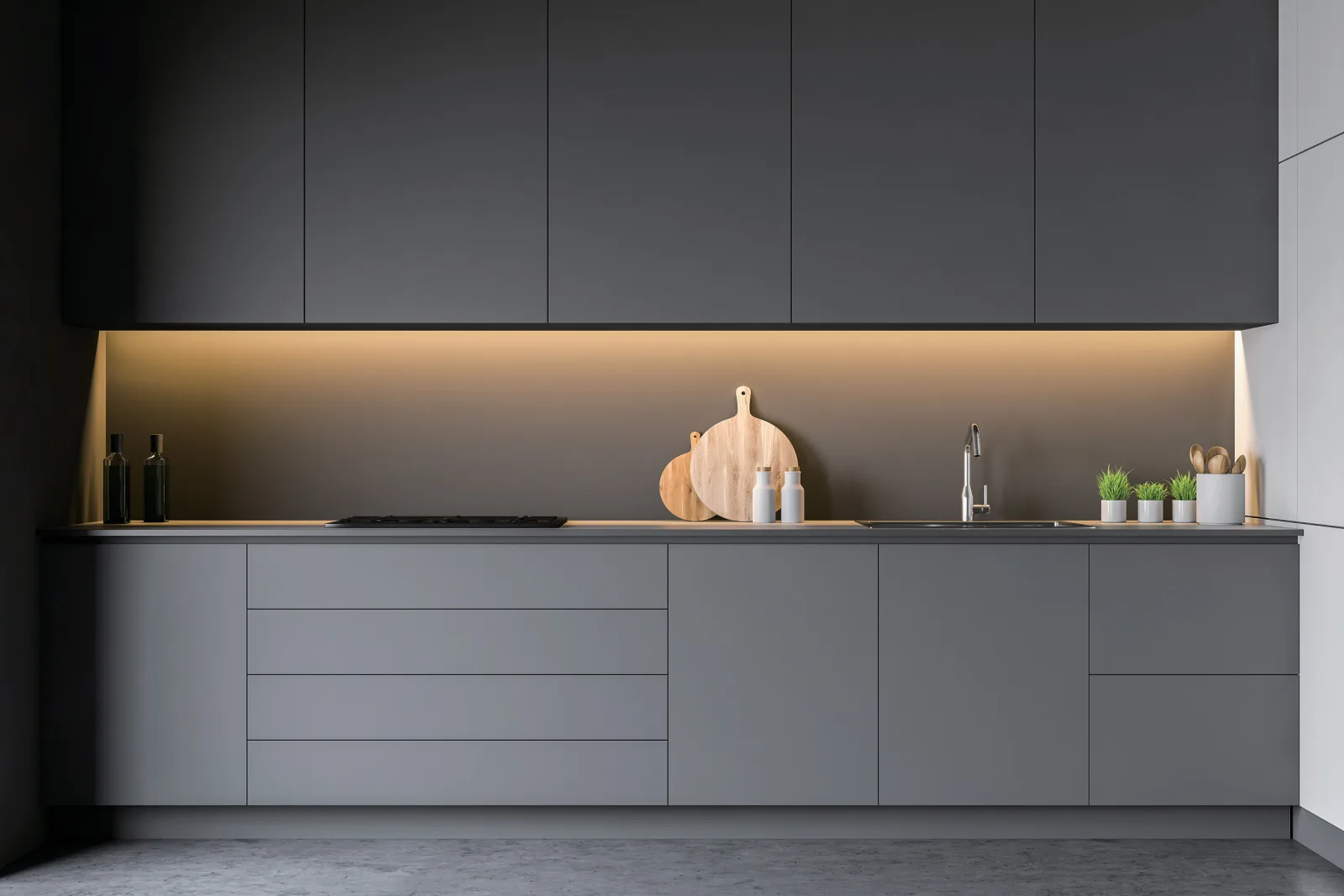
This is the most common "rope light vs strip light under cabinet" question, and strip wins every time it's a permanent install. A strip near the front of the cabinet, in a channel with a frosted diffuser, lights the full depth of the counter. Rope under a cabinet is visible from a seated position and sits on 120V. Our under-cabinet LED strip lighting guide covers mounting position, brightness and switching in detail.
Shelf and display
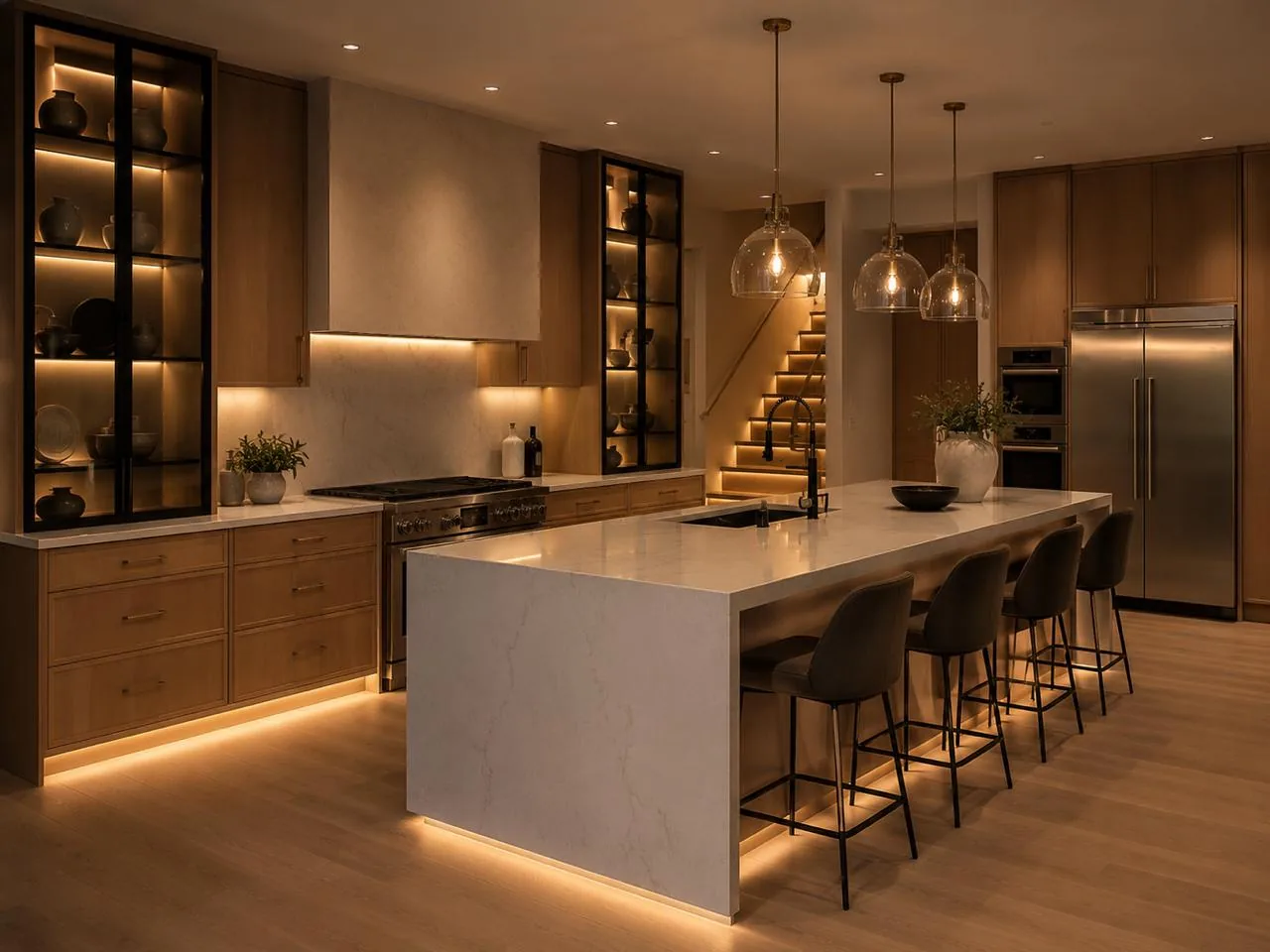
For lighting the full depth of a bookcase or display shelf, a strip along the front edge or the side stiles gives even light from end to end. Pucks make sense on glass shelves, where a single fixture above can light down through several shelves, and for spotlighting one object, such as a vase or a trophy.
When Puck Lights Still Make Sense
Pucks aren't obsolete. They fit a handful of jobs better than strip:
- Accent spots. One puck above a piece of art glass or a decorative object makes a deliberate pool of light. A line would flatten it.
- Glass shelves. A puck at the top of a glass-shelved cabinet throws light down through every shelf. Strip on each glass shelf has nowhere to hide the wire.
- Retrofit with no channel. In a finished cabinet with no light rail and no way to run a channel, a few pucks with short leads can be the cleanest option.
- Closets and pantries. A battery or plug-in puck lights a shelf where running power isn't worth it.
The weak spot is evenness along a long run, which brings us to the counter.
Worked Example: Light Along a 10 ft Counter
Say you have a 10 ft (120 in.) counter, cabinets about 18 in. above it, and a glossy tile backsplash.
With pucks. Five pucks on 24 in. centers, the first and last 12 in. from the ends. On the counter, 18 in. below, the cones overlap enough to look reasonably even. The trouble shows on the backsplash. Assume each puck sits 3 in. off the wall:
- A spot on the backsplash 6 in. below the cabinet, directly under a puck, is about 6.7 in. from the light.
- A spot at the same height halfway between two pucks is 12 in. to the side and about 13.7 in. away.
- Inverse-square alone gives the halfway spot roughly a quarter of the light (6.7 ÷ 13.7, squared, is about 0.24). The light also arrives at a more glancing angle, which cuts it further.
The result is a row of bright arches with darker gaps between them, the classic scallop. On glossy tile or polished stone you also see a reflection of each puck. Moving the pucks forward helps, but five separate sources never read as a line.
With strip. One 10 ft run in a channel near the front edge. Every foot of counter and backsplash gets the same light, so there are no arches. If the strip cuts every 2 in., you can land within 2 in. of the full length. At an example rating of 3 W/ft on 24V:
- Load: 10 ft × 3 W/ft = 30 W.
- Current: 30 W ÷ 24V = 1.25 A.
- Driver: 30 W ÷ 0.8 = 37.5 W minimum, so the next standard size up.
There's also a wiring difference. Five pucks means five leads back to a splitter hub, each one routed and hidden. The strip has one feed. The power supply calculator will size the driver for your actual strip.
Common Mistakes
- Using rope light as permanent under-cabinet lighting. It's visible, it puts 120V in the millwork, and it rarely cuts to the cabinet length.
- Cutting rope light between marks. The section you cut through goes dark, and you can't fix it with a splice.
- Spacing pucks too far apart on a glossy backsplash. Scallops and reflections are worse on shiny surfaces. If the run is long and the backsplash is glossy, use strip.
- Sticking bare strip to the cabinet without a channel. The dots reflect off the counter, the adhesive lets go over time, and the strip runs warmer with no aluminum to carry heat away. Choose from channels with a diffuser.
- Choosing SMD where a shallow channel is visible. If the diffuser sits close to the strip or the line is in view, COB avoids the dotted look.
- Mixing color temperatures. Pucks from one kit and strip from another rarely match. Pick one CCT for everything in the room.
- Buying by price per foot. Rope is cheapest per foot and costs the most in looks. Compare finished installs, not reels.
If you're still deciding what kind of strip to buy once you've ruled out rope and pucks, how to choose LED strip lights walks through voltage, density, CCT and CRI.
Frequently asked questions
Is LED strip better than rope light?
For permanent installs, yes. LED strip is low voltage, cuts every inch or two, aims its light in one direction and sits in a channel for a clean line, while rope light is bulkier, usually 120V and cuts only at long intervals.
Should I use puck lights or LED strip under cabinets?
Use LED strip for even light along a counter, especially with a glossy backsplash, where pucks create bright arches and dark gaps. Pucks are better for spotlighting objects or lighting glass shelves.
Can you cut rope light anywhere?
No. Rope light can only be cut at the marked cut points, which are commonly 18 in. to 3 ft or more apart. Cutting between marks leaves a dead section, and every cut end needs a cap rated for the voltage.
Is rope light good for outdoor use?
It works for temporary and holiday lighting, but PVC tends to yellow and stiffen in sunlight over time. For permanent outdoor lines, an outdoor-rated strip in a channel or silicone LED neon holds up better.
What replaced rope light in architectural lighting?
LED strip in aluminum channels replaced it in coves, cabinets and millwork, and LED neon flex replaced it where a visible glowing line is wanted, such as signs, railings and facades.
Specify with ENKORA
Working on a project? Send us the drawings and we will propose strips, profiles and drivers that fit together.