CRI 90 vs 95: When High-CRI LED Strip Is Worth It
What CRI and R9 actually measure, where a 95+ strip earns its cost, and a simple side-by-side test that shows the difference before you order.

CRI 90 vs 95 comes down to what sits under the light. For most homes and offices, a CRI 90 LED strip with a decent R9 value is plenty. Step up to 95+ when color is what people are judging: artwork, merchandise, food, skin, and the stone and wood a client picked by hand. On paper the gap is five points. On a walnut cabinet or a bowl of strawberries it's easy to see.
The catch is that the headline number doesn't give you enough to decide. Two strips can both claim CRI 90 and look nothing alike, because the number leaves out the color that matters most. Here's what CRI measures, what it misses, and where the extra cost of high-CRI strip earns its keep.
What CRI Actually Measures
CRI (Color Rendering Index, written Ra on most spec sheets) compares a light source with a reference light of the same color temperature. Below 5000K the reference is an ideal glowing-filament source (a black-body radiator, the physics behind incandescent light). From 5000K up it's a standardized daylight. A score of 100 means the test colors look the same under your light as under the reference.
The test is narrower than most people assume. Ra is the average of eight test colors, R1 through R8, and they're muted, mid-saturation pastels: grayish reds, tans, greens, blues and violets. Because it's an average, a light can do well on seven of them, poorly on one, and still post a respectable score.
Three things follow from that:
- CRI is a fidelity score. It tells you how close the light gets to the reference, not whether the room looks good.
- CRI only compares within one color temperature. A 2700K strip at CRI 95 and a 4000K strip at CRI 95 still look different, because each is measured against its own reference.
- The steps aren't equal. Going from 80 to 90 is a big visible jump. Going from 90 to 95 is subtler, and it shows up mostly in reds, skin and natural materials.
Why R9 Matters (and Why It's Not in Ra)
The CRI method defines more test colors than the eight it averages. R9 is saturated red, and it isn't part of Ra. Red is also where white LEDs have always been weakest. A white LED is a blue chip under phosphor, which makes plenty of blue, green and yellow light. Filling in the deep red end takes more expensive phosphor and costs efficiency, so cheaper strips skip it.
Red does a lot of work in an interior. It's in skin, in wood (cherry, walnut, mahogany, and even white oak carries warm red tones), in leather, brick, terracotta, red meat, tomatoes and wine. A strip with weak R9 makes all of those look flat, a little gray or brownish, even while the spec sheet says CRI 90.
R9 can run from a negative number up into the 90s. Rules of thumb we use on jobs:
- R9 below zero: reds go muddy. Fine for a mechanical room, not for a room anyone sits in.
- R9 of 50 or better: a sensible floor for any 95+ spec and for good residential work.
- R9 well above 50: what a strong high-CRI strip delivers, and what you want on gallery, retail and food jobs.
If a spec sheet quotes Ra and says nothing about R9, ask. If nobody can give you a number, assume it's low. Our CRI and color rendering guide covers the extended test colors in more detail.
TM-30: The Newer Way to Measure
CRI was developed decades before white LEDs existed, and its eight pastel samples don't stress a modern spectrum very hard. The Illuminating Engineering Society's TM-30 method was written to fix that. It scores a light against 99 color samples drawn from real objects and reports two main numbers:
- Rf (fidelity), on a 0 to 100 scale. Same idea as CRI, measured across a much wider set of colors.
- Rg (gamut), which says whether colors look more or less saturated than under the reference. Around 100 means about the same; above 100 means richer, below 100 means duller.
TM-30 reports also include a color vector graphic, a circular chart that shows which hues the light pushes or pulls. You'll see TM-30 on more spec sheets each year. Where it's listed, a high Rf with Rg close to 100 is a good sign. In practice, most US specs for LED strip are still written as CRI plus R9, because that's what every strip spec sheet reports.
CRI 80 vs 90 vs 95: Side by Side
| CRI (Ra) | What you see | Where it fits | Cost in efficacy |
|---|---|---|---|
| 80 | Whites look clean, but reds and skin read flat and wood looks dull | Garages, utility and back-of-house areas, signage, light nobody looks at closely | The baseline: most light per watt |
| 90 | Natural, comfortable color in most rooms; reds hold up if R9 is decent | Homes, offices, corridors, most coves and under-cabinet work | Somewhat less light per watt than 80 in the same construction |
| 95+ | Rich reds, true skin tones, wood and stone that match the samples | Galleries, retail, food display, salons, kitchens with natural materials, hospitality | Lower again; plan for more watts or a denser strip to reach the same lumens |
Why does output drop? The phosphors that fill in red turn part of the light into deep red wavelengths, and the eye is less sensitive there, so the lumen count falls even though the light is better. How much it falls depends on the product, so compare lumens per watt on spec sheets at the same color temperature, never across CCTs. If you're working to a target brightness, check the numbers against our guide to LED strip lumens per foot before you settle on a CRI.
Where 95+ Pays Off
Spend the money where people look at objects, materials or each other up close.
- Galleries and museums. Paintings, prints and textiles are exactly what color fidelity is for, and curators notice weak reds immediately. See the museums and galleries collection for strips suited to that work.
- Retail display. Clothing, cosmetics, jewelry and furniture sell on color, and a product that looks different at home comes back. Shelf and case lighting from the retail display collection is where high CRI does its job.
- Food. Bakery cases, deli counters, produce, a restaurant pass or a buffet line. Red meat, tomatoes and berries are the first things to look tired under a low-R9 strip.
- Salons and dressing areas. Hair color, makeup and skin. The client judges the result in the mirror.
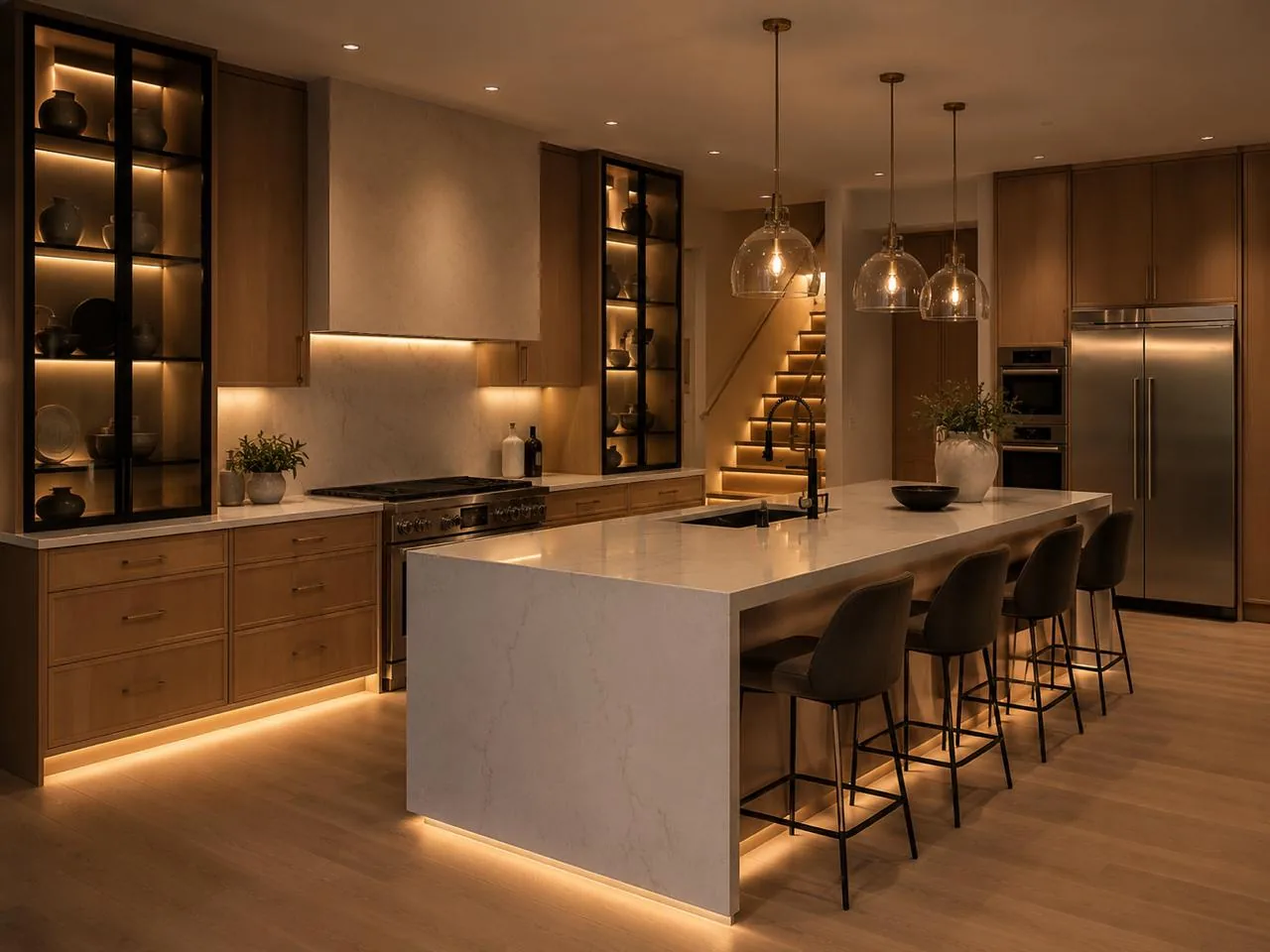
- Kitchens and baths with natural materials. Walnut, white oak, marble, quartzite, terracotta tile. Under-cabinet strip lights the countertop the client chose from a slab yard, so it should look like the slab.
- Hospitality. Bar backs, banquettes, lobbies and restaurants, where people, food and finishes all share the same light.
Where CRI 90 Is Plenty
CRI 90 is good, and for a lot of work it's the right call. Use it with confidence for:
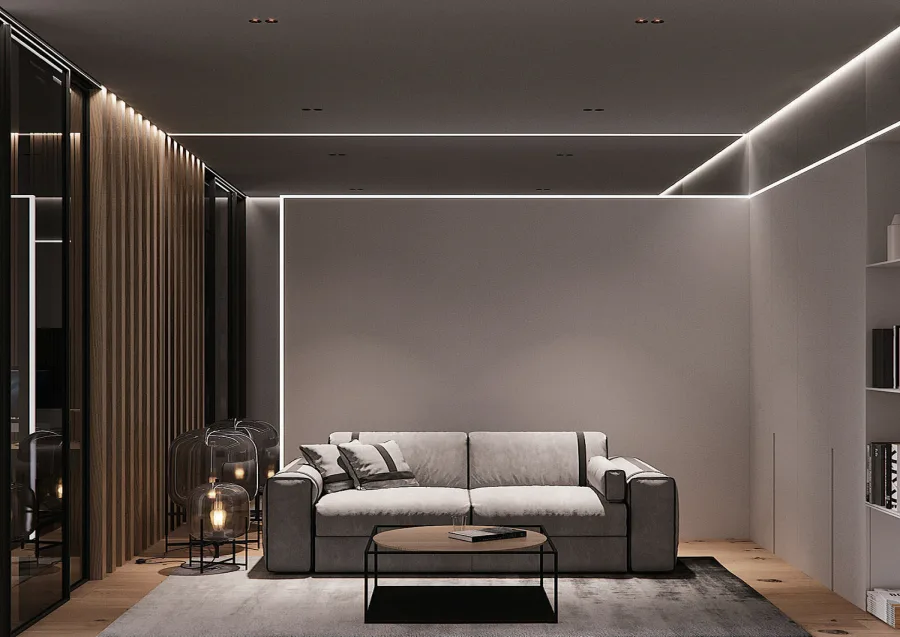
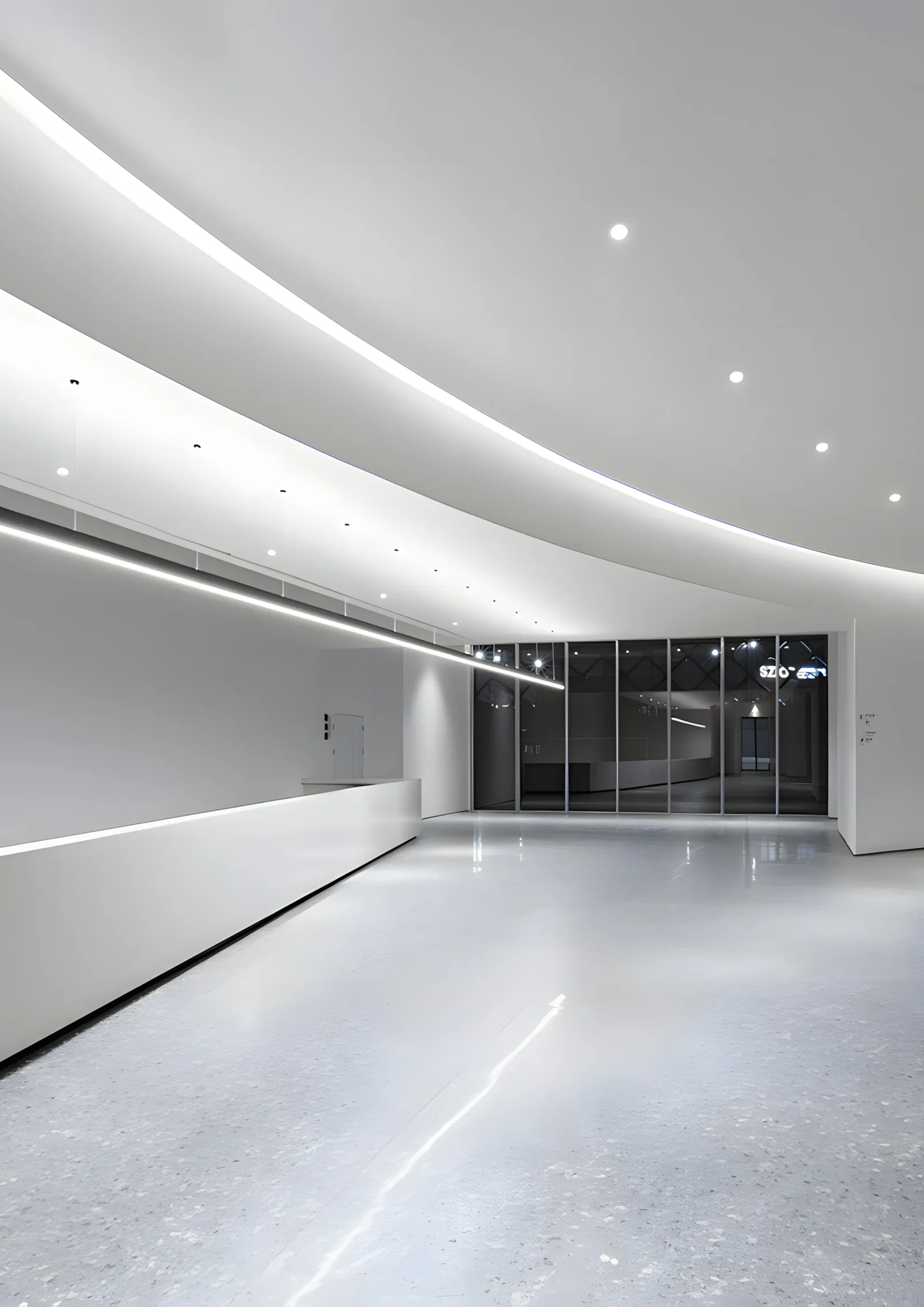
- Indirect cove lighting that bounces off a white ceiling. The surface is white, so there's little color to render.
- General office and corridor lighting, stairs, closets and toe kicks, where nobody is studying a surface.
- Jobs where output per watt matters, such as long runs on a tight driver budget or high mounting heights.
We hold 90 as the floor for occupied rooms. CRI 80 belongs in utility spaces. If you want the wider picture of how CRI fits with output, voltage and color temperature, start with how to choose LED strip lights.
How to Compare High-CRI Spec Sheets
A number on a datasheet is only as good as the test behind it. Work through these before you order:
- Find Ra and R9 for the exact CCT you're ordering. CRI often varies between color temperatures on the same strip, so a figure quoted for 4000K says little about the 2700K version.
- Check whether the figures are for the finished strip or the LED package. Package data from the LED's own datasheet can read better than the strip it ends up on.
- Ask for the test conditions and the report. In the US, complete solid-state products are measured to IES LM-79. A report with the spectral graph tells you far more than a single number.
- Compare efficacy like for like. Lumens per watt only means something between strips at the same CCT and the same CRI class.
- Look at color consistency too. A 95 CRI strip with loose binning can still show a tint shift where two reels meet.
- Read TM-30 if it's there. High Rf, Rg near 100.
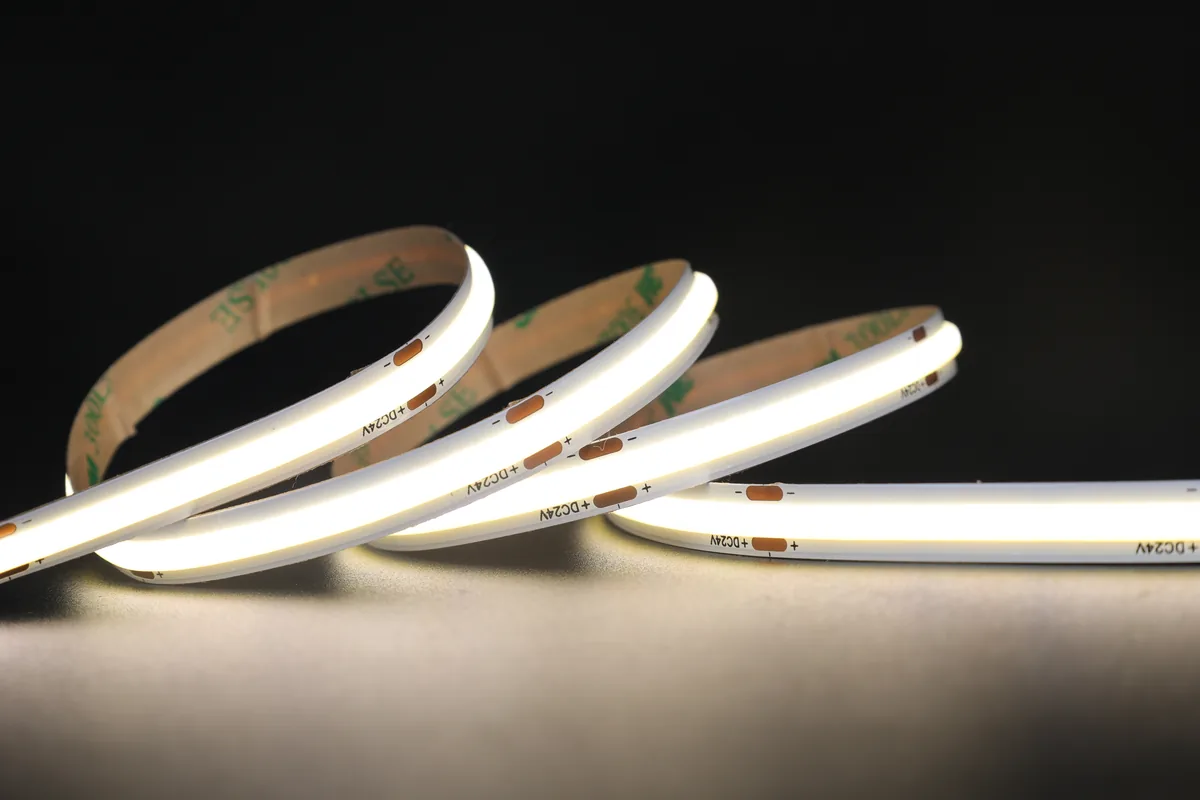
Our high-CRI collection groups the strips built for this kind of spec.
How to See the Difference Yourself
Spec sheets settle most questions. For a client who wants to see it, or for your own peace of mind on a big order, run this side-by-side test:
- Get samples of both strips at the same CCT, ideally the same construction (both COB or both SMD) and in the same channel and diffuser you plan to use.
- Power them from the same 24V or 12V driver so both run at the same voltage.
- Set them up in a dark room, about 12 in. above a white board, with a piece of card standing between them so the light doesn't mix.
- Put matching objects under each one: the back of your hand, an offcut of the actual wood or stone, red fabric, a red apple or a few strawberries, and a printed photo with faces in it.
- Look at reds and skin first, then wood grain. Swap the objects left to right halfway through, so you're not just favoring one side of the table.
- Judge by eye, not by phone. Cameras auto-correct white balance and hide exactly the differences you're looking for.
Most people pick the 95+ sample within seconds on skin and red fabric. On a white wall they often can't tell, which is useful to know too.
Common Mistakes
- Buying on the headline number. CRI 90 with an R9 near zero and CRI 90 with R9 above 50 are different products. Always get R9.
- Mixing CRI levels in one view. A 95 strip in the display shelves next to an 80 strip under the cabinets makes the cheaper one look dingy. Keep everything in one sightline at one CRI class, and order replacement reels from the same product line.
- Ignoring CCT match. A CCT mismatch is more visible than a CRI difference. A 3000K strip beside 2700K downlights looks wrong at any CRI. Settle color temperature first with our color temperature guide, then choose CRI.
- Comparing CRI across color temperatures. A 6500K strip at 95 and a 2700K strip at 95 are each scored against a different reference. Compare at the CCT you're installing.
- Forgetting the lumens. A 95+ strip produces less light per watt. Pick it on CRI alone and the display case can end up under-lit.
- Testing bare strip. A diffuser changes output and can shift the color slightly. Test in the channel and lens you'll actually install.
Frequently asked questions
Is 90 CRI good for LED strip lights?
Yes. CRI 90 is a good standard for homes, offices and most commercial rooms, as long as the R9 (saturated red) value is reasonable. Step up to 95+ where color is judged closely, such as galleries, retail displays, food and kitchens with natural wood and stone.
Can you see the difference between CRI 90 and 95?
Usually, yes, on reds, skin tones and natural materials like wood and stone. On a plain white wall or ceiling the difference is hard to see, which is why CRI 90 is enough for indirect cove lighting.
What is a good R9 value for LED strip?
R9 of 50 or better is a sensible floor for premium residential and 95+ CRI work, and strong high-CRI strips go well above that. An R9 below zero means reds will look dull.
Why does high-CRI LED strip use more power for the same light?
The phosphors that fill in deep red shift part of the light to wavelengths the eye is less sensitive to, so lumens per watt drop. Compare efficacy at the same color temperature and plan the driver for the extra watts if you need the same brightness.
What is the difference between CRI and TM-30?
CRI averages eight muted test colors against a reference light. TM-30 uses 99 color samples and reports fidelity (Rf) and saturation (Rg) separately, which gives a fuller picture of how a light renders color.
Specify with ENKORA
Working on a project? Send us the drawings and we will propose strips, profiles and drivers that fit together.