LED Neon Flex Guide: Top Bend vs Side Bend vs 360°, and Which to Specify
The bend direction decides what a neon flex can draw. How to pick the right geometry, size and build for signage, architecture and décor.
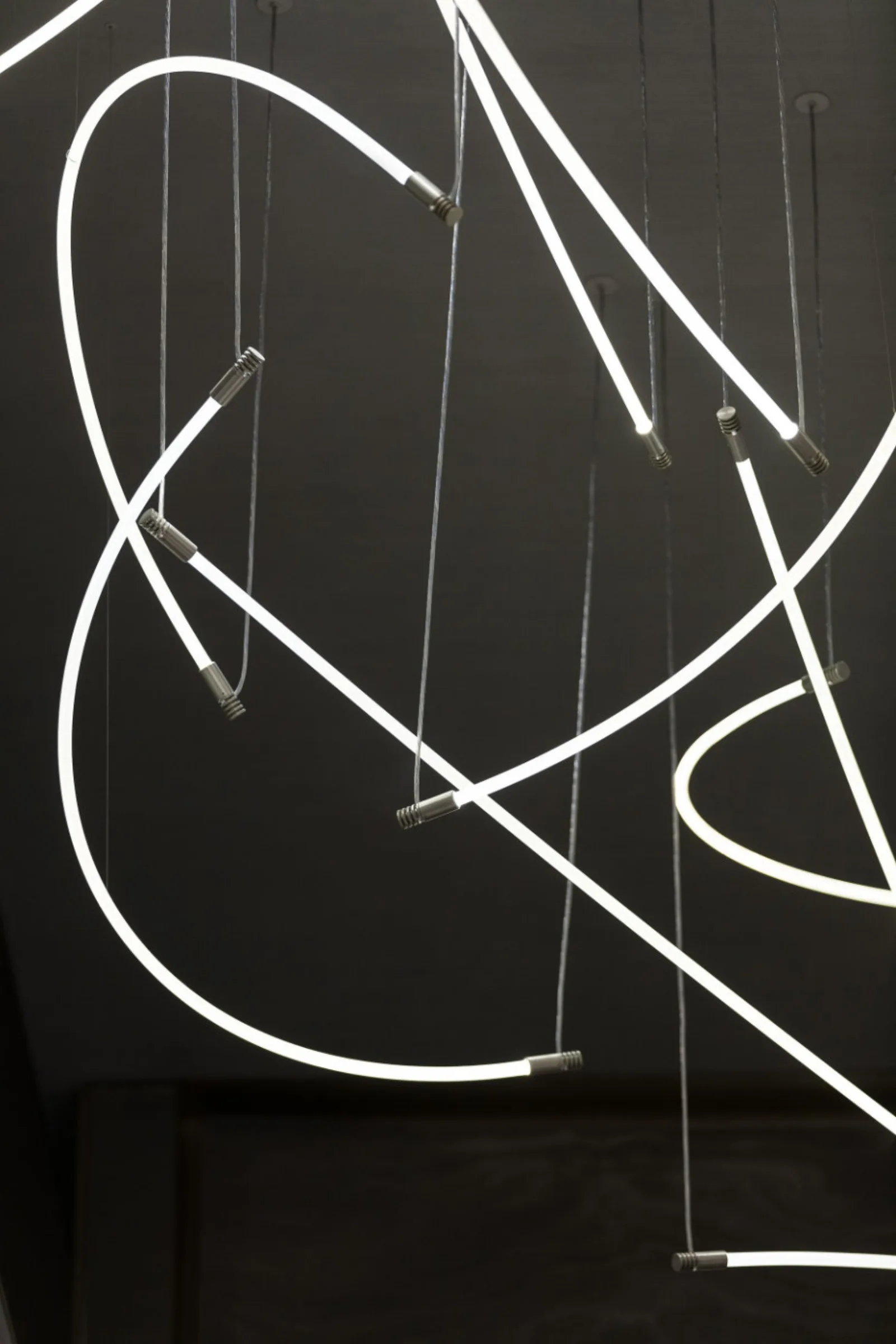
LED neon flex gives you the look of glass neon, a smooth and continuous line of light, from a flexible silicone profile running at low voltage. You'll find it in signage, architectural outlines, bars and restaurants, retail interiors and on building facades.
The first decision isn't color or brightness. It's geometry. Which way the profile bends decides what shapes it can draw, and ordering the wrong one is the most common neon flex mistake we see.
How LED Neon Flex Is Built
Inside is an LED strip. Around it is a diffusing silicone body that spreads the light into a smooth line with no visible dots. That body also protects the strip, which is why so many neon profiles carry IP65 to IP68 ratings. Compared with glass neon it uses far less power, runs at low voltage and doesn't shatter when someone bumps it with a ladder.
Top Bend, Side Bend and 360°
| Geometry | Where the light comes out | How it bends | Best for |
|---|---|---|---|
| Side bend | A narrow edge | Within the plane of the mounting surface | Letters, logos, lines and curves drawn flat on a wall |
| Top bend | The wide face | Up and over the surface it is mounted on | Following arches, curved edges, steps and soffits |
| 360° round | All around | In any direction | Suspended and freestanding pieces, pendants, sculpture |
Here's a quick test. Sketch the shape you want and picture it lying against the mounting surface. If the curves stay flat on the wall, like a word or a wave, you need side bend. If the line has to follow a surface that curves toward you or away from you, like an arch or a curved bar front, you need top bend. If it hangs in the air and people see it from every side, choose 360°.
Size and Visual Weight
Neon flex is specified by its cross-section, such as 6×12 mm (about 1/4 × 1/2 in.) or 16×16 mm (about 5/8 in. square). Smaller sections draw finer lines and tighter curves, which suits script lettering and furniture details. Larger sections read from farther away and suit facades and big outlines. Before you order, check the minimum bend radius of the size you've chosen against the tightest curve in the artwork.
Output, Color and Control
- Static white from warm 2700K to cool 6500K suits architectural outlines.
- RGB mixes colors for scenes and events.
- Addressable (SPI) neon controls segments individually for chases and animated effects.
Because the diffuser softens the light, neon output is usually quoted lower than bare strip of the same power; judge it by the effect you need rather than raw lumens. Browse neon flex or the NEON FLEX series.
Indoors, Outdoors and Under Water
Most neon flex is suitable for damp and exterior locations within its IP rating. Pools and fountains are a different application: use products purpose-built for immersion, as in the UNDERWATER series, and read our pool lighting guide before specifying.
Mounting, Cutting and Power
- Mount it in aluminum channels or clips made for that exact profile. They hold the shape and help with heat.
- Cut only at the marked cut points, and seal every cut end and connection with the matching end caps. An unsealed cut end is the most common cause of outdoor failures.
- Plan feed points so no run exceeds the published maximum length, and size the driver at total watts ÷ 0.8 with the power supply calculator.
- Keep connections reachable for service, especially on facades and signage.
Common Neon Flex Mistakes
- Ordering side bend for an arch (or top bend for lettering). Check the geometry against the drawing before anything else.
- Bending tighter than the rated radius. The profile looks fine on day one and cracks or goes dark a few months later.
- Forgetting the lead-in. Plan where each feed wire enters the artwork, or you'll end up with a visible cable in the middle of a logo.
- Leaving it unsealed outdoors. Every cut end needs its cap and sealant, even when the profile itself is rated IP67.
Frequently asked questions
What is the difference between top bend and side bend neon flex?
Side-bend neon emits light from a narrow edge and bends within the plane of the mounting surface, which makes it ideal for letters and logos on a wall. Top-bend neon emits from its wide face and bends up and over the mounting surface — ideal for following arches, curved edges and steps.
What is 360° neon flex used for?
Round 360° neon emits light all around, so it suits pieces seen from every side: suspended lines, pendants, freestanding sculpture and décor.
Can LED neon flex be cut?
Yes, at the marked cut points only. Every cut end and connection must be sealed with the matching end cap to keep the rated protection.
Is LED neon flex waterproof?
Many neon profiles are rated IP65 to IP68 for damp and exterior use. Continuous immersion in pools or fountains calls for products purpose-built for underwater use.
Specify with ENKORA
Working on a project? Send us the drawings and we will propose strips, profiles and drivers that fit together.