
DAM-ART COB: More Control, Better Light
Good linear light depends on where the light goes, not only how much there is. DAM-ART builds on standard COB to keep the line smooth while sending more of it forward.
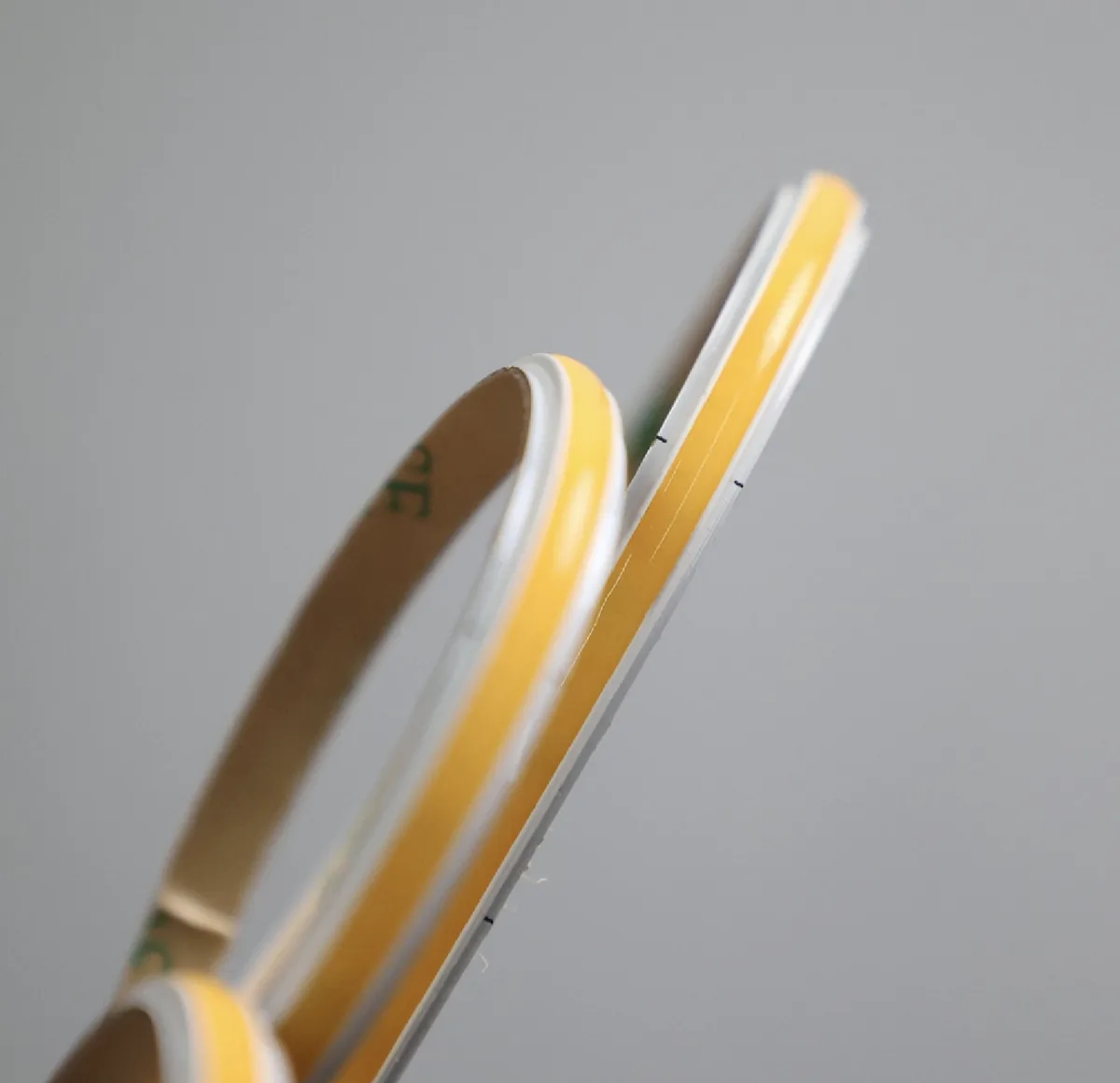
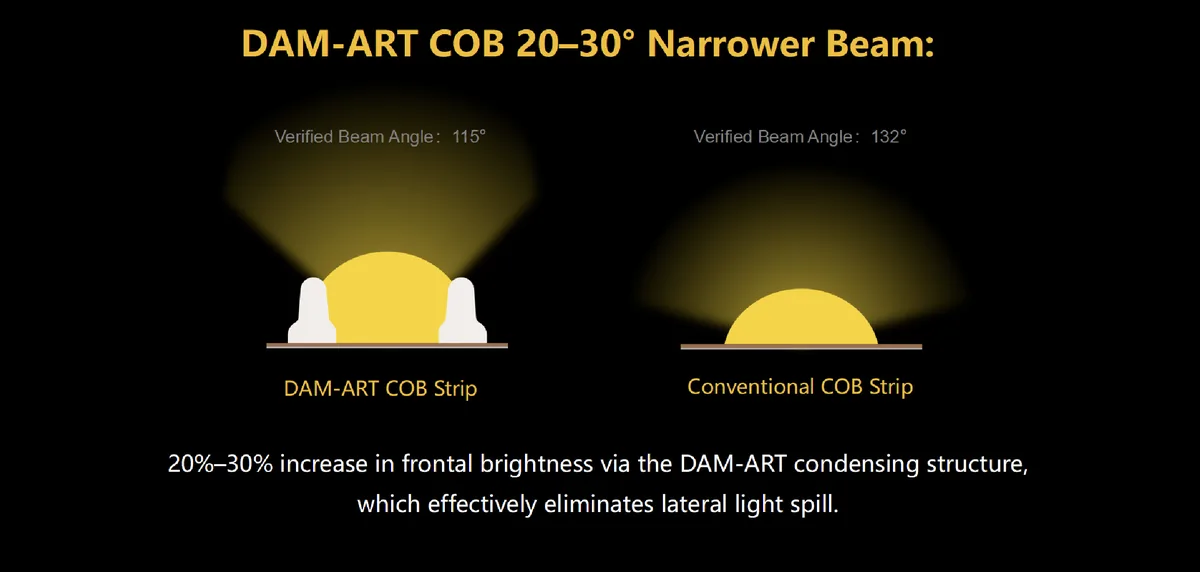
COB (chip-on-board) strip packs closely spaced LED chips under one continuous phosphor layer. That is what makes it a smooth, dot-free line of light. DAM-ART adds barrier structures around the light-emitting area: they hold the phosphor in place and direct more of the light forward instead of letting it spread to the sides.
The result: smooth COB light with more controlled forward distribution.
DAM-ART vs standard COB
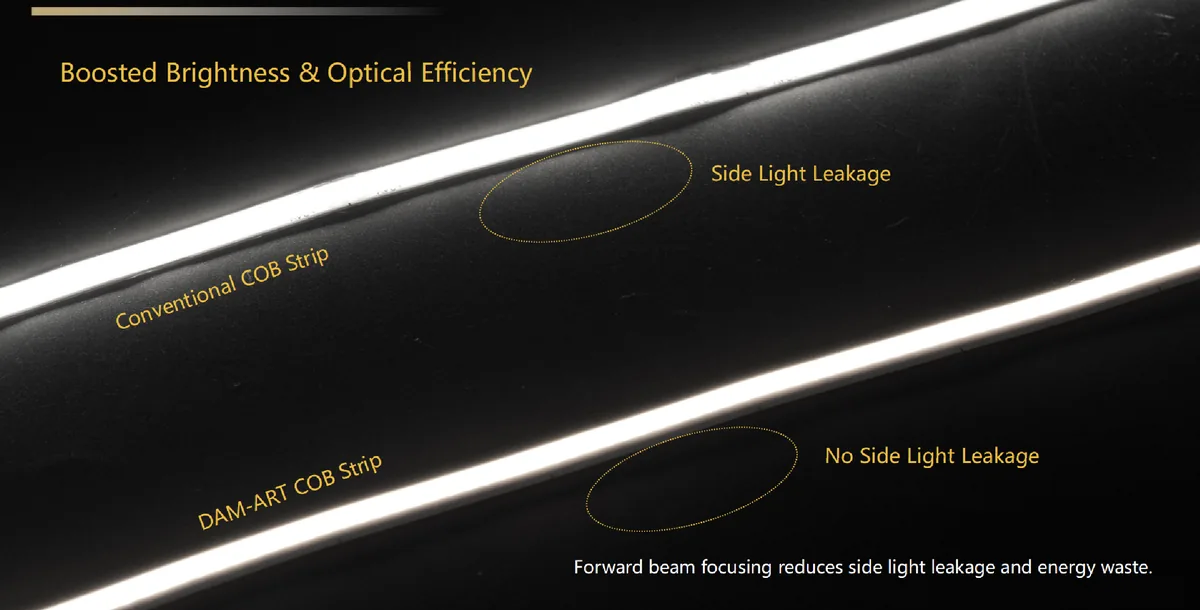
A standard COB strip gives broad, even light that suits most general linear lighting. A DAM-ART strip gives more control over the emitting area and less light spilling sideways. Both can be fully dot-free; the difference is how the light is distributed.
Key benefits
- More controlled light
- More of the output lands on the intended surface or viewing direction, useful where precise illumination matters.
- Smooth, dot-free line
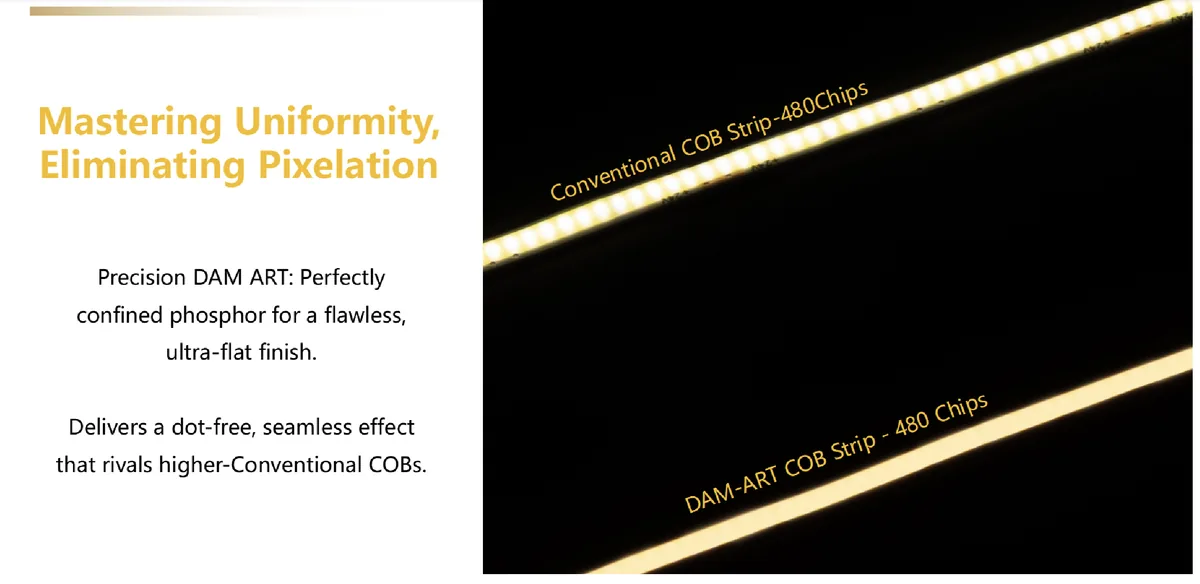
- Like a good standard COB, a continuous line of light with no visible LED points.
- Clean emitting surface
- The barriers keep the phosphor area consistent, which improves how the strip looks lit and unlit.
- Flexible applications
- Depending on the product, DAM-ART can be built as white, tunable white, RGB or addressable COB.
Where DAM-ART COB fits
- Cabinet and shelf lighting. Clean continuous light under cabinets, inside shelving and along furniture details.
- Architectural linear lighting. With a matching aluminum channel, defined lines of light in ceilings, walls, niches and recessed details.
- Retail and display. Smooth light aimed at merchandise, shelving and display surfaces.
- Decorative and accent lighting. Continuous light on furniture, millwork and custom architectural elements.
Which should you choose?
- Broad, smooth illumination is the priority
- Wide light distribution is desirable
- A simple, cost-effective solution meets the brief
- More forward-directed light is preferred
- Less side spill is an advantage
- The installation calls for a more controlled effect
- The specific product meets your width, brightness, voltage, color-quality and installation requirements
Neither is better for every project. The right choice depends on the application, the channel and diffuser, the mounting position, the brightness and color temperature you need, and the overall lighting design.
A note on brightness and efficiency
More forward-directed light does not necessarily mean more total light or higher efficiency. Lumens measure total visible output; lumens per watt (lm/W) measure efficacy; forward brightness describes how strongly light is directed in one direction. DAM-ART can improve directional distribution without raising total lumens or lowering power draw. To compare products, use the specifications and photometric data of each strip.