
RGB + White
Color plus a dedicated white channel for true whites.


INDOOR RGB + WHITE COB LED Strip White 4000K 3.7 W/ft 24V 12 mm IP20
COB · 24V · 4000K
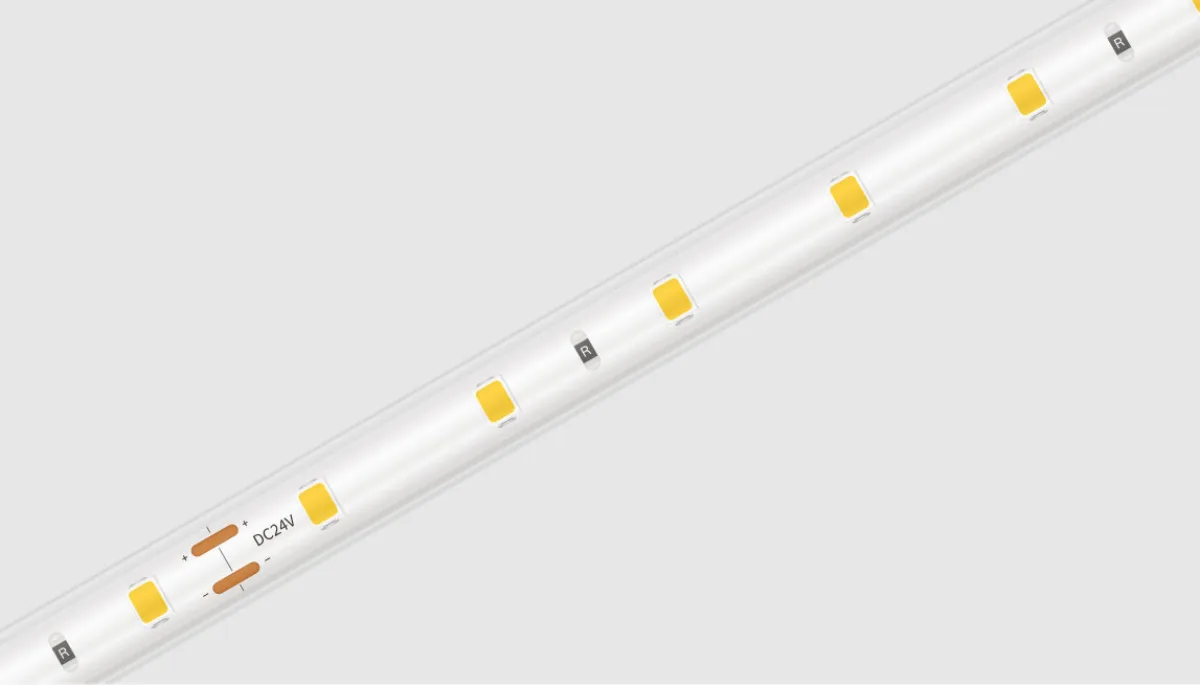
WATERPROOF RGB + WHITE COB LED Strip White 4000K 3.7 W/ft 24V 12 mm IP65
COB · 24V · 4000K

WATERPROOF RGB + WHITE COB LED Strip White 4000K 3.7 W/ft 24V 12 mm IP67
COB · 24V · 4000K


INDOOR RGB + WHITE SMD LED Strip White 6500K 4.0 W/ft 24V 12 mm IP20
SMD · 24V · 6500K
WATERPROOF RGB + WHITE SMD LED Strip White 6500K 4.0 W/ft 24V 12 mm IP65
SMD · 24V · 6500K
WATERPROOF RGB + WHITE SMD LED Strip White 6500K 4.0 W/ft 24V 12 mm IP67
SMD · 24V · 6500K
Why the fourth channel matters
RGBW adds a dedicated white emitter alongside the three color channels. The white is a real phosphor-converted white with a real CRI, rather than an approximation mixed from primaries, so one run can serve as the room's working light and as its color layer.
That makes it the practical choice wherever a color-changing installation also has to function as normal lighting: a hotel lobby that is warm white by day and branded color at night, a residential cove that does Christmas in December and 3000K the rest of the year.
The cost is a conductor, a four-channel controller, and a slightly lower density of any single emitter type — four channels share the same board space that three or one would otherwise use, so output per channel is lower than a dedicated strip of the same size.
Common questions
What is the difference between RGB and RGBW LED strip?
RGB mixes white from red, green and blue, which tends to look bluish or pink and renders color poorly. RGBW adds a separate white LED, so the strip gives a real white and softer pastels as well as saturated color.
What is the difference between RGBW and RGB+CCT?
RGBW has one white channel at a fixed color temperature. RGB+CCT has two white channels, warm and cool, so the white can be tuned as well as the color.
What controller does RGBW strip need?
A four-channel controller or decoder plus a constant-voltage driver. The strip usually has five conductors: a common positive and one for each color channel.