
RGB
Full-color strips and neon driven by 3-channel controllers.

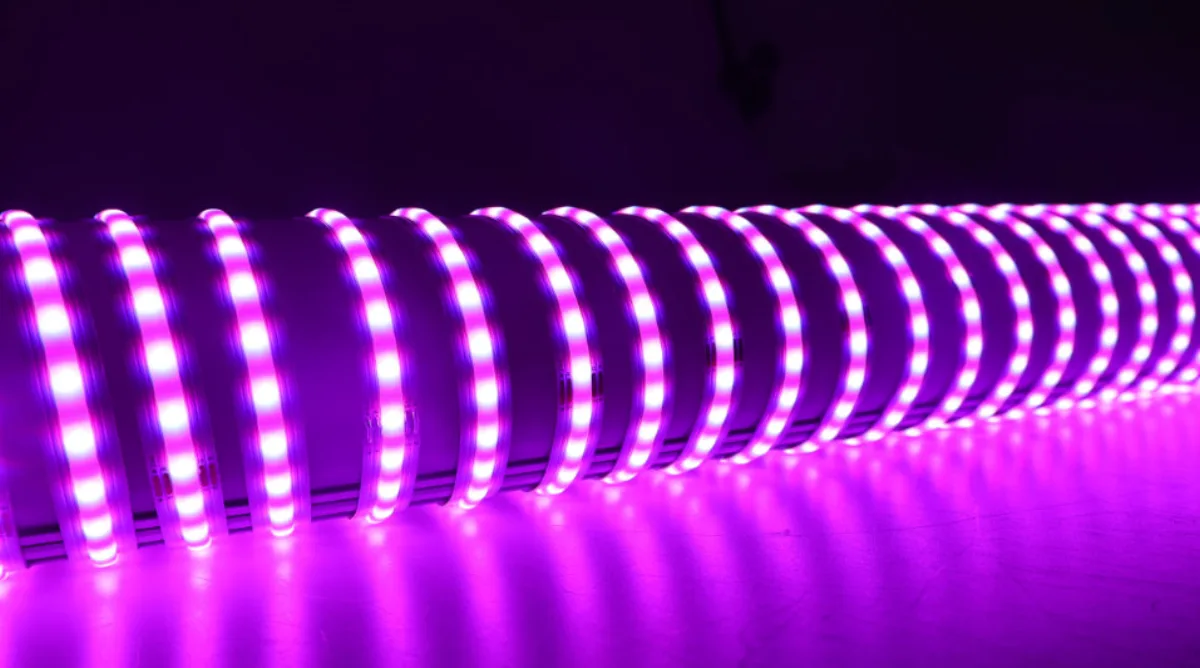
INDOOR RGB COB LED Strip 3.0 W/ft 24V 10 mm IP20
COB · 24V · RGB
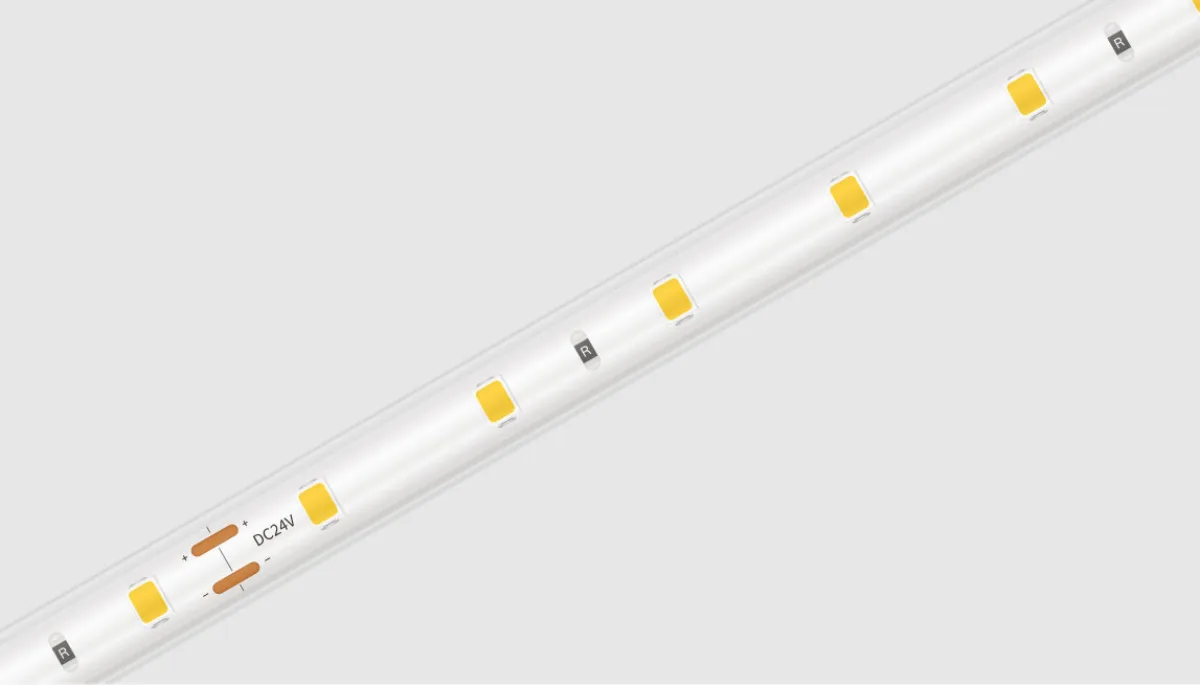
WATERPROOF RGB COB LED Strip 3.0 W/ft 24V 10 mm IP65
COB · 24V · RGB

WATERPROOF RGB COB LED Strip 3.0 W/ft 24V 10 mm IP67
COB · 24V · RGB
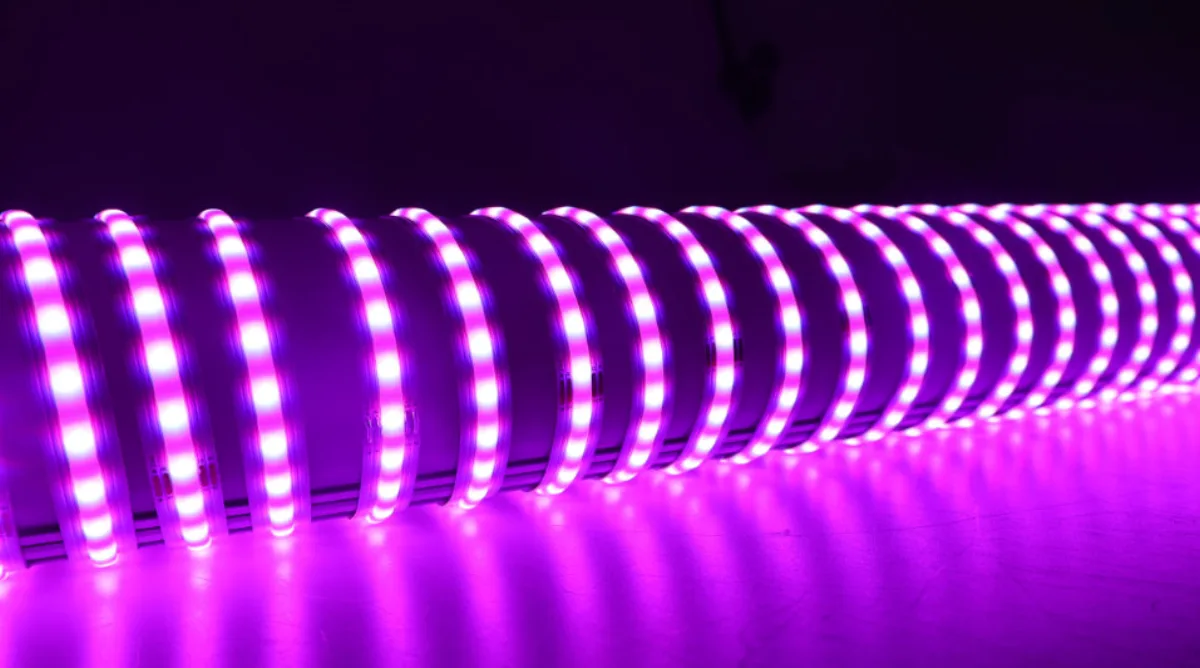

INDOOR RGB COB LED Strip 3.7 W/ft 24V 10 mm IP20
COB · 24V · RGB
WATERPROOF RGB COB LED Strip 3.7 W/ft 24V 10 mm IP65
COB · 24V · RGB
WATERPROOF RGB COB LED Strip 3.7 W/ft 24V 10 mm IP67
COB · 24V · RGB


INDOOR RGB SMD LED Strip 4.0 W/ft 24V 10 mm IP20
SMD · 24V · RGB
WATERPROOF RGB SMD LED Strip 4.0 W/ft 24V 10 mm IP65
SMD · 24V · RGB
WATERPROOF RGB SMD LED Strip 4.0 W/ft 24V 10 mm IP67
SMD · 24V · RGB


NEON FLEX TOP BEND COB LED Neon RGB 3.7 W/ft 24V 12×5 mm IP68
COB · 24V · RGB
NEON FLEX SIDE BEND SMD LED Neon RGB 4.6 W/ft 12V 8×17 mm IP66
SMD · 12V · RGB
NEON FLEX TOP BEND SMD LED Neon RGB 4.6 W/ft 24V 16×16 mm IP66
SMD · 24V · RGB
What RGB does and does not do
RGB mixes red, green and blue across three channels, and every LED on the run shows the same color at the same moment. That makes it simple, cheap and reliable for color washes, accent lighting and scene changes — a whole cove turning amber, a bar front shifting through a palette over an evening.
It cannot produce a good white. Mixing three colors to make white gives a thin, slightly off result that no one would specify as a working light source, which is why RGB is usually a second layer beside a white strip rather than a replacement for one. If you need both from a single run, RGBW or RGB+CCT are the honest answers.
Color effects also need a controller that matches the voltage and the channel count, and the run needs three conductors carried the whole way. Decide that before the channel goes in.